1

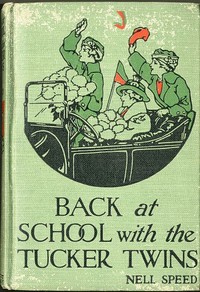
Back at School with the Tucker Twins — Edition Insights
(0 User reviews)
1533
Project Gutenberg
2011
Not confirmed
Christmas stories; Twins -- Juvenile fiction; Boarding school students -- Juvenile fiction; African Americans -- Social conditions -- Juvenile fiction; Racism -- Juvenile fiction
Readers of public-domain and historical texts
Project Gutenberg digital edition
en
Edition facts
Words
58,906
Reading time
257 min
Text sections
8
For Back at School with the Tucker Twins — Edition Insights, the stored edition analysis reports 58,906 words, 4 hr 17 min estimated reading time, and 8 detected text sections.
The text analysis averages about 18.1 words per sentence, while the detected sections provide another way to judge how the source is divided.
Project Gutenberg metadata also associates the work with “Christmas stories,” connecting these edition facts with the source record’s subject description.
Source:
Project Gutenberg record #36089
This editorial note examines how the opening, middle, and later excerpts of Nell Speed's 1917 school story guide a first reading, focusing on the narrator's reflective voice, the embedded humor of student publications, and the structural repetition of annual routines at Gresham.
Read the complete public-domain text at its original source.
Read on Project GutenbergThe narrator's first sentence—"Could it be possible that only one year had passed since I started to boarding school?"—immediately establishes a reflective, slightly astonished tone. This opening frames the entire story as a continuation, not a beginning, inviting readers familiar with the series to settle into a known world while newcomers catch up through the narrator's comparisons to the previous year. The detailed description of the journey—the early hour, Mammy Susan's bath water, the spirited horse, the mail-order suit—grounds the narrative in sensory specifics that signal a domestic, Southern setting. The narrator's voice is warm but observant, noting differences (the suit's cut, the less shiny suitcase) that hint at growth beneath surface repetition.
Repetition as a Structural Clue
The opening chapter leans heavily on parallels to the prior year: the same train, the same early hour, the same Mammy Susan. The narrator even pinches herself to confirm it is not a dream. This deliberate repetition is not lazy writing but a structural device. It tells the reader that the book values continuity and ritual—the school year as a cycle. Yet small variations (the suit's style, the waiting for friends already made) suggest that change is happening beneath the surface. A first-time reader should watch for these small differences; they are the story's engine. The narrator's observation that her horizon has broadened "so much that it seemed more like ten years" hints at internal development that the plot will likely explore through familiar routines.
Embedded Humor and Student Voices
Midway through the excerpts, the text shifts abruptly into a student-run humor section: jokes, limericks, and a serialized story called "The Correspondence Cure." This material is not narrated by the main character but presented as a school publication. The jokes are period-specific—a child afraid God is sending him a wife, a girl fasting from washing hands, a waiter serving a check instead of a sandwich. The limericks target classmates by name (Polly Kent, Grace Greer), suggesting an insider culture. For a first reader, this section offers a direct, unmediated taste of the students' voices and concerns, distinct from the narrator's more polished tone. It also reveals the book's willingness to pause plot for communal humor, a feature of the school-story genre.
The Serial Story Within the Story
"The Correspondence Cure" introduces a father-son dynamic where the boy calls his father "Jo" and regards him as "one of the fellers." This embedded narrative is clearly a student-authored fiction, complete with a chapter heading and dialogue. Its inclusion suggests that the school encourages creative writing and that the book values metafictional play. The story's premise—a father hiring a stranger to write fatherly letters to a difficult son—echoes themes of guidance and misbehavior that may resonate with the main plot. A reader encountering this should note that the book is not solely focused on the narrator's experiences; it also showcases the community's literary output, adding texture and a sense of a living school culture.
The Later Excerpts and the Catalog's Warnings
The Project Gutenberg record lists among its catalog subjects "African Americans -- Social conditions -- Juvenile fiction" and "Racism -- Juvenile fiction." The excerpts provided do not contain direct evidence of these themes, but the presence of a character called "Mammy Susan" in the opening—a stereotypical figure—indicates that the book may reflect early 20th-century racial attitudes. A first reader should be alert to how the narrative treats African American characters, especially given the catalog's explicit mention of racism as a subject. The later excerpts, dominated by jokes and the serial, do not resolve this; they may even sidestep it. The reader is left to infer from the full text how the book addresses—or fails to address—these issues.
Reading Back at School with the Tucker Twins requires attention to its layered structure: the narrator's reflective frame, the embedded student publications, and the gaps between what the catalog warns and what the excerpts show. The book rewards a reader who treats repetition as meaningful, who enjoys period humor, and who remains critical of its silences. Approach it as a document of its time, not a timeless story, and let the contrasts between the narrator's voice and the student voices guide your interpretation.
Rereading the Tucker Twins’ accounts of Gresham’s annual routines, I found myself thinking of another school’s quieter triumphs. There is a particular warmth in how Nell Speed’s narrator lingers over small moments—the joke in a student paper, the familiar rhythm of a new term—that reminds me of the dusty track in The Girls of Central High on Track and Field Or, The Champions of the School League — Background and Themes. Both feel like old, kindly friends remembering their youth.
There are no reviews for this eBook.
There are no comments for this eBook.
Reader reflection
Take a moment to reflect on this book
Create a short personal record of your experience with this book.
Your progress
0
/
10
2
How did the book work for you overall?
3
Is this a title you would suggest to others?
4
How easy was the book to follow?
5
How would you describe its reading pace?
6
How did the reading compare with what you expected?
7
Would you start a conversation about this book?
8
Is this a title worth rereading?
9
In one sentence, what did you learn?
10