1

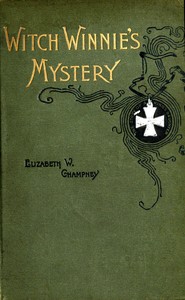
Witch Winnie's Mystery, or The Old Oak Cabinet: The Story of a King's Daughter — Context and Discussion
(0 User reviews)
186
Project Gutenberg
2011
Not confirmed
Conduct of life -- Juvenile fiction; Friendship -- Juvenile fiction; Boarding schools -- Juvenile fiction; Young women -- Conduct of life -- Juvenile fiction; Students -- Juvenile fiction; Charity -- Juvenile fiction; Theft -- Juvenile fiction
Readers of public-domain and historical texts
Project Gutenberg digital edition
en
Edition facts
Words
83,562
Reading time
364 min
Text sections
8
This digital edition of Witch Winnie's Mystery, or The Old Oak Cabinet: The Story of a King's Daughter — Context and Discussion is described by source-level measurements including 83,562 words, 6 hr 4 min estimated reading time, and 8 detected text sections.
The text analysis averages about 18.2 words per sentence, while the detected sections provide another way to judge how the source is divided.
Project Gutenberg metadata also associates the work with “Conduct of life -- Juvenile fiction,” connecting these edition facts with the source record’s subject description.
Source:
Project Gutenberg record #36313
In this sequel to 'Witch Winnie,' the Amen Corner girls face a theft at their boarding school, with detective Mr. Mudge suspecting the art professor. The narrative shifts between playful school life and tense mystery, using first-person voice and changing pace.
Read the complete public-domain text at its original source.
Read on Project GutenbergThe narrator, Tib, opens by recalling the Amen Corner's self-satisfied piety before Witch Winnie upended their circle. The voice is confiding and slightly ironic, as when Tib notes they were 'exceedingly virtuous and preternaturally perfect in our own estimation.' This sequel picks up with the Ten of King's Daughters managing a home for children, but a theft soon disrupts their routines. The mystery unfolds through dialogue and interior reactions, with the pace quickening during detective scenes.
A First-Person Lens on School Life
Tib’s narration gives the story an intimate, conversational feel. She addresses the reader directly and uses colloquial asides, such as explaining that she is 'never called anything but Tib by my friends.' This voice shapes how events are filtered: the theft is not just a plot point but something that unsettles the group’s dynamics. The opening chapters establish a leisurely pace, full of descriptions of the tower suite and the girls’ projects. But when Mr. Mudge appears, the sentences grow shorter, and Tib’s observations become more anxious. The contrast between the cozy Amen Corner and the detective’s intrusions creates a tonal shift that mirrors the mystery’s escalation.
Accusation and Reaction: The Pace of Suspense
In Chapter XI, the pace tightens dramatically. Mr. Mudge announces he knows the thief, and Tib records Winnie’s pallor and Milly’s faint with quick, clipped sentences. The detective’s method—using a suppressed chuckle and a remark 'below his breath'—adds theatrical tension. Milly’s defense of Professor Waite comes in a rush of explanations, each sentence building on the last. The excerpt shows how Champney controls tempo: long, explanatory paragraphs give way to rapid dialogue and physical reactions. This section demonstrates that the mystery’s resolution depends less on clues than on character responses under pressure.
Recurring Details: The Cabinet and the Lock
Two objects anchor the plot: the old oak cabinet and a door lock. The cabinet is introduced in the title and appears as a piece of furniture that holds secrets. The lock, found in the professor’s tool chest, becomes a piece of circumstantial evidence. Tib notes that after the theft, a bolt is added to the studio door—'locking the stable after the horse has been stolen,' as Mr. Mudge says. These physical details are not just props; they are touchpoints for the narrative’s shifts between everyday school life and detective work. The cabinet, in particular, promises a revelation in later chapters, but the excerpts only hint at its role.
Readers should attend to how Tib’s voice colors every event, from the girls’ banter to the tense interviews with Mr. Mudge. The mystery is as much about character as about stolen goods, and the pacing varies sharply between the Amen Corner’s domestic scenes and the detective’s interrogations. The old oak cabinet remains a focal point whose full significance is yet to be disclosed.
Sometimes a story lingers less for its plot than for the quiet feeling it leaves behind—like how Witch Winnie's Mystery balances nervous suspicion with the comfort of close friends. I remembered that same tension reading this one, where old secrets press in from every shadowed corner. It made me think of you, and how we both enjoy that gentle unease. Air Service Boys Over the Enemy's Lines; Or, The German Spy's Secret — Inside the Classic
There are no reviews for this eBook.
There are no comments for this eBook.
Reader reflection
Before you leave, reflect on the book
Use these questions to collect your thoughts before moving on.
Your progress
0
/
10
2
How did the book work for you overall?
3
How likely are you to recommend this book?
4
How demanding did the text feel?
5
Which element worked best for you?
6
Did anything about the book feel genuinely new?
7
How did the pace of the book feel?
8
How clear did the writing feel?
9
What is the main idea you are taking away?
10