1

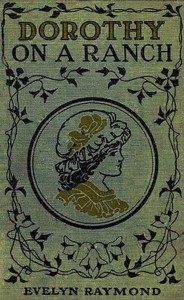
Dorothy on a Ranch — Themes and Context
(0 User reviews)
2097
Project Gutenberg
2008
Not confirmed
Western stories; Horses -- Juvenile fiction; Colorado -- Juvenile fiction; Ranch life -- Juvenile fiction; Chester, Dorothy (Fictitious character) -- Juvenile fiction; Sheep ranches -- Juvenile fiction; Silver mines and mining -- Juvenile fiction
Readers of public-domain and historical texts
Project Gutenberg digital edition
en
Edition facts
Words
63,594
Reading time
277 min
Text sections
6
The source record for Dorothy on a Ranch — Themes and Context measures this digital text at 63,594 words, 4 hr 37 min estimated reading time, and 6 detected text sections.
The text analysis averages about 16.2 words per sentence, while the detected sections provide another way to judge how the source is divided.
Project Gutenberg metadata also associates the work with “Western stories,” connecting these edition facts with the source record’s subject description.
Source:
Project Gutenberg record #26389
Dorothy travels to a Colorado sheep ranch, where military-style drills, a silver mine, and a grizzly bear shape her summer. The narrative moves between private train car, corral, and mountain cabin, with recurring images of drilling, fiddling, and animal encounters.
Read the complete public-domain text at its original source.
Read on Project GutenbergFrom the opening scene in a private railway car sidetracked at Denver, Dorothy on a Ranch establishes a pattern of movement between enclosed spaces and open frontier. The narrative shifts from the luxurious "Erminie" to a corral drill, a sheep herder's cabin, and Bald Eagle Rock, each transition marked by a character's physical passage—through a window, across grass, or up a mountain trail. Recurring images of drilling, fiddling, and animal encounters (a bear, horses, sheep) tie these scenes together, while the voice of Captain Lemuel, with his military "Hep, hep, hep" and tender regard for "Little One," provides a steady counterpoint to Dorothy's own eager curiosity.
From Private Car to Corral Drill
The story opens inside the "Erminie," a private car that functions as a mobile domestic space. Dorothy marvels at the luxury of "owning a real car, going and stopping just as you please," and debates whether to return east with Aunt Betty or stay in the mountains. This interior, enclosed setting quickly gives way to the open corral behind the Barracks, where Captain Lemuel transforms a group of youngsters into an "awkward squad." The drill—with its repeated "Hep, hep, hep—March!"—is both a whimsical game and a deliberate scheme to improve Leslie's posture and health. The movement from car to corral is literal (they exit through a window) and symbolic: the controlled order of rail travel yields to the regimented play of ranch life.
The Fiddle Bow and the Rifle
Captain Lemuel explicitly links two skills when he tells Dorothy, "All I want is to see you shoot well as you can fiddle." This pairing of music and marksmanship recurs throughout the excerpts. Dorothy's fiddling the night before has already won the Captain's heart, and he now hopes to extend her influence to the drill ground. The narrative treats both activities as forms of discipline and expression: the fiddle bow requires "fingers for the fiddle bow," while the rifle demands steady aim. The Captain's comment that Dorothy has "the head of sense" suggests that her musical talent is not merely ornamental but a sign of the practical intelligence he values in a ranch hand.
The Watchers and the Midnight Search
Chapter titles such as "The Midnight Searching Party" and "The Watchers at Roderick's" hint at a pattern of nocturnal vigilance. In the excerpts, the Captain's drill takes place in daylight, but the narrative repeatedly returns to moments of watching and waiting—whether for a lost sheep, a grizzly, or a silver mine. The setting itself, with its "Barracks" and "corral," evokes a frontier outpost where alertness is a survival skill. Dorothy's own watchfulness is evident in her deference to the Captain's talk and her quick imitation of his "Hep, hep, hep." The structure of the novel, moving from one watchful scene to another, mirrors the characters' constant readiness for the unexpected.
Animal Encounters and the Grizzly
The catalog subjects list horses, sheep, and silver mines, but the excerpts also feature a "great animal" that drops from an upright position at Dolly's window and crawls on all fours along the porch. This grizzly bear, mentioned in the chapter list, represents the wildness that borders the ranch's domestic order. The narrative treats animals as both threats and attractions: horses are to be ridden, sheep to be herded, and the bear to be confronted. The movement between the tame (the corral drill) and the wild (the grizzly) structures the plot, with each animal encounter testing the characters' courage and competence. Dorothy's ability to ride "a little" and her eagerness to learn suggest she will meet these tests.
The Sheep Herder's Cabin and Silver Mine
Two chapter titles—"The Sheep Herder's Cabin" and "A Trip To Bald Eagle Rock"—point to isolated, elevated settings that contrast with the communal Barracks. The cabin, likely a remote shelter, and the rock, a high vantage point, serve as destinations that require a journey away from the ranch's center. The silver mine, listed as a subject, adds an economic dimension: the search for mineral wealth drives some of the action. These locations are not merely backdrops but active elements in the narrative's movement. Dorothy's summer thus becomes a series of excursions from the domestic base of the Erminie or the Barracks into increasingly wild terrain, each step outward testing her adaptability and resolve.
Readers attentive to the novel's structure will notice how each chapter introduces a new setting—private car, corral, cabin, rock—and a new challenge. The recurring images of drilling, fiddling, and animal encounters are not decorative but functional, linking the characters' physical actions to their emotional growth. The narrative rewards close attention to the way Dorothy moves through these spaces, whether through a window or up a mountain trail, and how her companions respond to the same landscapes in different ways.
That Colorado summer, with its drills and that bear, felt like the kind of quiet haunting you carry home. Reading it made me think of Ruth and Mollie’s own strange mountain adventure, where a lost trail holds more than a ghost. Some stories just settle into you that way, soft and lasting. The Automobile Girls in the Berkshires; Or, The Ghost of Lost Man's Trail — Story, Setting & Ideas reminded me of that same ache.
There are no reviews for this eBook.
There are no comments for this eBook.
Reader reflection
How did this book work for you?
Your answers remain private and are stored only in this browser.
Your progress
0
/
10
2
How much did you enjoy the reading experience?
3
Would you recommend this book to another reader?
4
How easy was the book to follow?
5
Which aspect of the book did you value most?
6
How did the reading compare with what you expected?
7
Did the book offer a fresh perspective?
8
Would this book work well in a reading group?
9
What changed or sharpened your thinking?
10