1

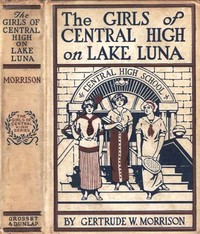
The Girls of Central High on Lake Luna; Or, The Crew That Won — Reading Companion
(0 User reviews)
1314
Project Gutenberg
2010
Not confirmed
Rowing -- Juvenile fiction; Canoes and canoeing -- Juvenile fiction; High school students -- Juvenile fiction; Vacations -- Juvenile fiction; Girls -- Juvenile fiction
Readers of public-domain and historical texts
Project Gutenberg digital edition
en
Edition facts
Words
45,724
Reading time
199 min
Text sections
5
The catalog record for The Girls of Central High on Lake Luna; Or, The Crew That Won — Reading Companion provides practical reading context through 45,724 words, 3 hr 19 min estimated reading time, and 5 detected text sections.
The text analysis averages about 13.5 words per sentence, while the detected sections provide another way to judge how the source is divided.
Project Gutenberg metadata also associates the work with “Rowing -- Juvenile fiction,” connecting these edition facts with the source record’s subject description.
Source:
Project Gutenberg record #30840
This editorial note examines the structure and recurring imagery in Gertrude W. Morrison's girls' adventure novel, focusing on the movement between lake and island scenes, the use of twin confusion for plot development, and the interplay of mystery and athletic competition.
Read the complete public-domain text at its original source.
Read on Project GutenbergThe novel opens with a specific, image-rich scene: two sisters in a canoe, whispering about a bearded man on Cavern Island. This moment establishes a pattern of movement between the lake's open water and the island's hidden coves and caves, a structural rhythm that carries through the story. The twins, Dora and Dorothy, are nearly indistinguishable, and their identical appearance becomes a recurring device for both humor and plot complications, particularly in the rowing practice sequences where even the coach cannot tell them apart.
Twin Confusion as a Structural Device
The twins' interchangeability is not merely a character trait but a structural element. When Aunt Dora tries to enforce discipline by identifying which twin rows in which seat, the narrative exploits the confusion: "the twins sometimes changed seats—and who was to know the difference?" This ambiguity allows the story to sidestep conflict while maintaining tension. The coach's inability to distinguish them mirrors the reader's own challenge, reinforcing the twins' unity as a pair rather than as individuals. The device recurs in the supper table scene where Aunt Dora asks which twin fetched her shawl, and Mr. Lockwood "could not undertake to say."
Lake and Island as Contrasting Spaces
The story moves between two primary settings: the open, social lake where races and practices occur, and the mysterious Cavern Island with its caves and hidden figures. The opening chapter immediately establishes this contrast: the twins paddle past East Point, spotting the "lone man" on Boulder Head, then hurry away. Later, the island becomes the site of police searches for the missing boy Short and Long, and the caves are beaten "for poor Short and Long." The lake itself is a stage for public competition, while the island harbors secrets—the strange man, the robbery connection, and the hiding places. This spatial opposition drives the plot forward.
Recurring Images of Surveillance and Discovery
Several scenes involve characters watching or being watched from a distance. The twins first see the lone man from their canoe; later, Aunt Dora observes the rowing practice from Colonel Swayne's estate. The police expedition to the island is accompanied by reporters who "rather made fun of the crowd of police searching so diligently for one small boy." These moments of observation create a layered narrative where characters are both watchers and watched. The image of the bearded man dipping behind a rock—"disappeared"—echoes later disappearances, including the stolen shell and the missing boy, reinforcing a pattern of things seen and then lost.
The Role of the Eight-Oared Shell as a Focal Object
The new eight-oared shell is described as "the handsomest shell that had ever been launched in Luna waters," even surpassing those of the wealthy Luna Boat Club. This object becomes a focal point for the girls' ambitions and a source of conflict. Its arrival early in the week sets a timeline for the Big Day race. The shell is also a marker of class and achievement: it draws parents to watch practice and provokes Aunt Dora's disapproval. The narrative invests the shell with symbolic weight, representing both the crew's unity and the external pressures they face. Its eventual fate—stolen, then recovered—is central to the climax.
Readers attentive to the novel's structure will notice how Morrison uses the twins' identical appearance not as a gimmick but as a functional plot mechanism, and how the lake-island geography organizes the action into alternating phases of open competition and hidden intrigue. The recurring motif of watching—from canoes, from shore, from police boats—invites the reader to consider who sees whom, and what remains unseen.
That rainy afternoon, I kept returning to the lake’s calm surface in The Girls of Central High on Lake Luna, where mystery dissolved into sunlight. The quiet ache of wanting answers reminded me of another afternoon, lost in a different hunt—one buried in an old house’s walls. That book, The Merriweather Girls in Quest of Treasure — Themes and Context, felt like the same gentle rain, only falling somewhere else.
There are no reviews for this eBook.
There are no comments for this eBook.
Reader reflection
How did this book work for you?
Your answers remain private and are stored only in this browser.
Your progress
0
/
10
2
How much did you enjoy the reading experience?
3
How likely are you to recommend this book?
4
How demanding did the text feel?
5
Could you follow the author’s main argument?
6
Would you start a conversation about this book?
7
How would you rate its originality?
8
Was the book what you thought it would be?
9
Which lesson or insight stayed with you?
10