1

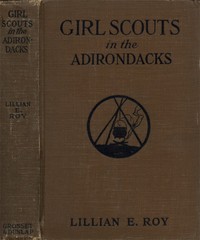
Girl Scouts in the Adirondacks — Edition Insights
(0 User reviews)
959
Project Gutenberg
2008
Not confirmed
Canoes and canoeing -- Juvenile fiction; New York (State) -- Fiction; Boy Scouts -- Juvenile fiction; Adirondack Mountains (N.Y.) -- Juvenile fiction; Girl Scouts -- Juvenile fiction
Readers of public-domain and historical texts
Project Gutenberg digital edition
en
Edition facts
Words
56,017
Reading time
244 min
Text sections
6
Before opening Girl Scouts in the Adirondacks — Edition Insights, the edition data offers a quick orientation: 56,017 words, 4 hr 4 min estimated reading time, and 6 detected text sections.
The text analysis averages about 15.9 words per sentence, while the detected sections provide another way to judge how the source is divided.
Project Gutenberg metadata also associates the work with “Canoes and canoeing -- Juvenile fiction,” connecting these edition facts with the source record’s subject description.
Source:
Project Gutenberg record #26345
An editorial note examining Lillian Elizabeth Roy's authorial choices in diction, dialogue, and description within this 1921 Girl Scouts adventure, focusing on the interplay between instructional nature lore and the characters' colloquial banter.
Read the complete public-domain text at its original source.
Read on Project GutenbergFrom the opening line—"Are we ready to start, girls?"—Lillian Elizabeth Roy establishes a conversational tone that persists throughout Girl Scouts in the Adirondacks. The dialogue is brisk and colloquial, with characters addressing their captain as "Verny" and using exclamations like "we're just crazy to be off." This informal register contrasts sharply with the expository passages, particularly Mrs. Vernon's lengthy lecture on weather signs, which reads like a field manual embedded in fiction. The juxtaposition reveals Roy's dual purpose: to entertain and to instruct.
Dialogue as Characterization
Roy differentiates her scouts primarily through speech. Juliet Lee is quick with retorts—"Ready! Why, Verny, we've been waiting for you these ten minutes"—while Ruth Bentley adds dramatic flair, referencing "mother's fear lest I never come home again." The captain, Mrs. Vernon, speaks in a measured, explanatory manner, often delivering information in complete sentences. This consistency in voice allows readers to identify characters without extensive physical description. Notably, the girls' banter often serves as a bridge between action and instruction, as when Hester guesses how Julie handled a rainstorm: "Leave it to Julie to find a way. I'll say she landed them all on the bank and then turned the canoe upside down over their heads."
Embedded Nature Lore
Roy weaves instructional content into the narrative through Mrs. Vernon's monologues. In one extended passage, the captain delivers a catalog of weather signs—sheep turning tails to windward, cows huddling, spiders strengthening webs—that reads as a standalone lesson. The girls' responses are minimal: "No one did" (understand weather-lore), followed by Hester and Judith contributing proverbs. This asymmetry suggests the intended audience is expected to absorb the information alongside the characters. Roy avoids making the lesson feel forced by framing it as a response to a real situation—the sudden shower—and by having the captain conclude with a practical application: "Now we can do as the Arabs—fold our tent and steal away."
Structure of Setbacks and Solutions
The chapter titles hint at a pattern of mishaps: "The Friday Jinx," "Another Day of Troubles," "Lost on the Trail." Within the excerpts, problems arise quickly—a black cloud, a rainstorm—and are resolved through resourcefulness. The canoeists, for instance, turn their boat upside down for shelter, a solution Hester predicts with confidence. This structure reinforces the Girl Scout ethos of preparedness. Roy's descriptions of these solutions are economical, focusing on the action rather than the emotion: "The spot thus enclosed was not large, but by huddling together they managed to keep dry." The emphasis is on practical outcomes, not internal drama.
Regional and Temporal Markers
Roy anchors the story in the Adirondacks through specific references: Old Forge as the destination, a "temporary tent" of chopped-down bushes, and a canoe trip that suggests the region's waterways. The language also reflects its 1921 origin. Characters use period-appropriate terms like "chauffeur" and "touring cars," and the girls' concerns—mothers' fears, the excitement of a long outing—align with early 20th-century middle-class norms. The instructional content, too, is of its time: the weather signs draw on folk wisdom and animal behavior, a precursor to modern nature study. These details, while not central to the plot, create a vivid sense of place and era.
Readers attentive to Roy's craft will notice how she balances the competing demands of story and instruction. The dialogue-driven scenes move quickly, while the expository passages invite pause. This rhythm—action, lesson, action—shapes the reading experience. For those interested in early 20th-century children's literature, the book offers a clear example of how authors embedded educational content within adventure narratives, using character voices to soften the didactic edge.
I found myself thinking about Roy’s careful, almost affectionate balancing act—how she lets the girls chatter slang one moment and then stop to name a fern the next. That same gentle hinge between wild adventure and quiet attention seems to live in The Merriweather Girls in Quest of Treasure — Themes and Context. It stayed with me like a campfire after everyone’s gone inside.
There are no reviews for this eBook.
There are no comments for this eBook.
Reader reflection
What did you think of this book?
Answer a few questions and save a private reflection on this device.
Your progress
0
/
10
2
How did the book work for you overall?
3
Would you encourage someone else to read it?
4
Did the language feel accessible?
5
Did any part of the book stay with you emotionally?
6
How clearly were the main ideas presented?
7
How original did the book feel?
8
Would you like to discuss this book with someone?
9
Which lesson or insight stayed with you?
10