1

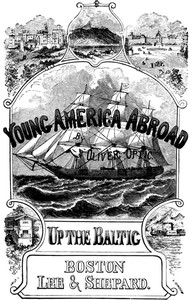
Up The Baltic; Or, Young America in Norway, Sweden, and Denmark — Context and Discussion
(0 User reviews)
932
Project Gutenberg
2008
Not confirmed
Conduct of life -- Juvenile fiction; Adventure stories; Sailing -- Juvenile fiction; Young men -- Juvenile fiction; Scandinavia -- Juvenile fiction
Readers of public-domain and historical texts
Project Gutenberg digital edition
en
Edition facts
Words
95,097
Reading time
414 min
Text sections
9
The catalog record for Up The Baltic; Or, Young America in Norway, Sweden, and Denmark — Context and Discussion provides practical reading context through 95,097 words, 6 hr 54 min estimated reading time, and 9 detected text sections.
The text analysis averages about 15.8 words per sentence, while the detected sections provide another way to judge how the source is divided.
Project Gutenberg metadata also associates the work with “Conduct of life -- Juvenile fiction,” connecting these edition facts with the source record’s subject description.
Source:
Project Gutenberg record #26653
Oliver Optic's second series opener follows the Academy Squadron through Scandinavia, blending travelogue with a subplot of deception and a fistfight. The narrative shifts between scenic description and tense dialogue, revealing a cashier who bribes a guide and a coxswain who provokes a brawl.
Read the complete public-domain text at its original source.
Read on Project GutenbergIn Up The Baltic, Oliver Optic alternates between broad scenic passages and tight, confrontational dialogue. The excerpt shows a cashier, Burchmore, secretly bribing a Norwegian guide named Ole to alter the party's route, while a coxswain named Clyde challenges him to a fight. The prose shifts from the leisurely pace of travel description to the clipped, urgent exchanges of a power struggle. This duality—between the promised tour of Scandinavia and the internal conflicts of the young American crew—defines the narrative's rhythm.
Bribery and Bluff: The Cashier's Gambit
The dialogue between Burchmore and Ole reveals a covert negotiation. Burchmore offers five species—more than a sovereign—to redirect the party from the Rjukanfos waterfall to Kongsberg. Ole's hesitation and his comment “Sanford will kill me” suggest a hierarchy among the young men, with the coxswain wielding authority. Burchmore's method is pragmatic: he accuses Ole of being paid by Sanford to “humbug” them, then counters with a higher bribe. The scene is built on short, direct lines that convey suspicion and calculation. The cashier's confidence—“my word is as good as my bond”—contrasts with Ole's “itching palm,” a phrase that economically characterizes the guide as mercenary. This subplot introduces a layer of deception beneath the travel narrative, where loyalty is for sale and the planned itinerary is fragile.
A Confrontation by the Lake
The fight between Clyde and Burchmore unfolds in a series of escalating provocations. Clyde accuses Burchmore of sneaking away, calls him a “Yankee coward,” and strips off his coat. Burchmore's response is measured: “I never fight if I can help it; but I always defend myself.” The physical clash is described succinctly—Clyde strikes first, then is thrown to the ground with a black eye. The narration remains external, reporting actions without interior commentary. Sanford's arrival as a mediator—“Enough of that, Albion”—halts the violence. The scene's pacing is rapid, with dialogue driving the action. The setting—a lake shore—provides a quiet backdrop for the outburst, heightening the contrast between the natural scenery and the characters' aggression. This incident shows how personal rivalries can interrupt the group's collective journey.
Voice and Structure: Travelogue as Frame
The excerpts reveal a narrative that uses travel as a container for character conflict. The preface states the book is “a record of what was seen and done,” but the sample focuses more on doing—specifically, on scheming and fighting. The voice is third-person omniscient, but it rarely enters characters' thoughts; instead, it reports dialogue and action. The guide Ole is a minor character who becomes pivotal through his bribe, while Burchmore and Clyde embody opposing codes: the cashier's cool manipulation versus the coxswain's bluster. The language is plain and functional, with occasional colloquialisms like “humbug” and “first rate.” The structure alternates between descriptive passages (not shown here) and these tense set pieces, suggesting that the book's pace varies considerably. Readers should expect the scenic descriptions to be punctuated by such interpersonal dramas.
Pay attention to how Optic uses secondary characters like Ole as catalysts for plot turns. The guide's dual loyalties and the crew's internal disputes create friction that the travel framework must absorb. The narrative voice remains steady, but the pacing shifts sharply between exposition and confrontation. This editorial note is based solely on the provided excerpts; the full book may develop these tensions further or resolve them differently.
The rain made the fjord descriptions in Up The Baltic feel almost tactile, that cold, grey Scandinavian light. I closed it, thinking about the coxswain’s pointless anger and the cashier’s quiet scheming, how easily trouble hides beneath a calm surface. That thought lingered, and I found myself pulling down Billie Bradley on Lighthouse Island; Or, The Mystery of the Wreck — Key Ideas to Explore from the shelf, wondering what secrets a wreck might hold.
There are no reviews for this eBook.
There are no comments for this eBook.
Reader reflection
Your personal reading reflection
Build a private reading journal entry for this title.
Your progress
0
/
10
2
How did the book work for you overall?
3
Would you recommend this book to another reader?
4
How easy was the book to follow?
5
How clear did the writing feel?
6
Could you apply anything you learned?
7
How personally connected did you feel to the book?
8
How distinctive were its ideas or approach?
9
Which lesson or insight stayed with you?
10