1

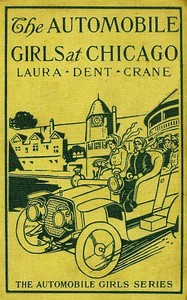
The Automobile Girls at Chicago; Or, Winning Out Against Heavy Odds — Reading Notes
(0 User reviews)
857
Project Gutenberg
2010
Not confirmed
Friendship -- Juvenile fiction; Vacations -- Juvenile fiction; Treasure troves -- Juvenile fiction; Girls -- Societies and clubs -- Juvenile fiction; Mystery and detective stories; Automobile travel -- Juvenile fiction; Chicago (Ill.) -- Juvenile fiction
Readers of public-domain and historical texts
Project Gutenberg digital edition
en
Edition facts
Words
44,949
Reading time
196 min
Text sections
6
This digital edition of The Automobile Girls at Chicago; Or, Winning Out Against Heavy Odds — Reading Notes is described by source-level measurements including 44,949 words, 3 hr 16 min estimated reading time, and 6 detected text sections.
The text analysis averages about 11.9 words per sentence, while the detected sections provide another way to judge how the source is divided.
Project Gutenberg metadata also associates the work with “Friendship -- Juvenile fiction,” connecting these edition facts with the source record’s subject description.
Source:
Project Gutenberg record #32437
In this 1912 girls' adventure, Barbara Thurston overhears a threatening conversation on a train, leading the Automobile Girls into a Chicago mystery involving a hidden treasure, a secret passage, and a false-face prank, all told through vivid scene shifts and recurring motifs of eavesdropping and discovery.
Read the complete public-domain text at its original source.
Read on Project GutenbergThe story opens not with a scenic description but with a jolt: Barbara Thurston wakes in a Pullman berth to overhear a stranger vow, “I’ll crush him! I’ll crush them both.” This overheard threat, delivered in a “slightly heightened tone,” immediately establishes a pattern of eavesdropping and hidden knowledge that recurs throughout the novel. The train setting—a confined, transitional space—mirrors the girls’ movement between scenes of leisure and danger, from the dizzying Chicago stock exchange to an attic party interrupted by a “hideous yellow face” pressed against a window.
Eavesdropping as a Structural Device
The novel repeatedly places its heroines in positions where they cannot help but overhear. Barbara’s initial awakening in the dark berth, where she “listened not because she wanted to hear, but for the reason that she could not well help overhearing,” sets a template. Later, the girls peer through windows and doors, catching fragments of conversation that propel the plot. This device creates a layered narrative: the reader knows only what the girls catch, often out of context, building suspense. The train’s stopped engine amplifies the first instance, making the whispered threat audible—a detail that ties setting to plot mechanics. The pattern suggests that knowledge in this world is partial, gained through chance and proximity rather than direct inquiry.
Recurring Images of Confinement and Escape
From the enclosed Pullman berth to the “iron gates” and “secret passage” of later chapters, the story is punctuated by spaces that trap or release. The attic party scene literalizes this: the girls are indoors, warm by the fire, when a “hideous yellow face” appears at the window, transforming a cozy room into a site of intrusion. The face is later revealed to be a prank—Tom’s false face—but the moment of fear hinges on the boundary between inside and outside. Similarly, the “Indian graveyard” and “treasure hunter” chapters suggest buried secrets beneath the surface. These images of hidden compartments, locked gates, and sudden appearances reinforce a world where safety is provisional and discovery requires crossing thresholds.
Movement Between Public and Private Spaces
The narrative shifts rapidly between crowded public arenas and intimate private rooms. Chapter titles like “A Dizzy Round of Pleasure” and “Battle of the Bulls and Bears” place the girls in the Chicago stock exchange—a male-dominated, high-stakes environment—while scenes like the attic party are domestic and playful. This oscillation creates a rhythm of exposure and retreat. The girls are equally at ease toasting marshmallows by the fire or confronting a “spook” in the rain barrel. The contrast is sharp: in one moment, they are fed flaming sweets by their friends; in the next, they are white-faced with fear. These shifts underscore the novel’s interest in how young women navigate both the thrill and the peril of urban adventure.
The Role of Play and Performance
Despite the mystery plot, the excerpts are filled with theatrical moments. Tom’s prank with the false face is a performance—a “spook” that the girls initially believe is real. Barbara’s triumphant capture of Tom, dragging him “by an ear,” turns the scene into a comic reversal. The marshmallow-feeding punishment is itself a staged ritual, with the girls “waiting on” Tom while a “mischievous twinkle” in their eyes signals their control. Even the treasure vision, where a girl sees “gold and sparkling jewels” in the fire, is a kind of play—a fortune-telling game that blurs into genuine mystery. These performances suggest that the girls are learning to read appearances, distinguishing genuine threats from staged ones, a skill central to the detective work that the catalog subjects promise.
Readers should pay attention to the novel’s use of thresholds—doors, windows, curtains—as points where information and danger enter. The story rewards close observation of who overhears what, and how the girls’ responses shift between fear, laughter, and decisive action. The incomplete excerpts leave the treasure’s fate unknown, but the pattern of discovery through eavesdropping and boundary-crossing is already clear.
I think of Barbara Thurston leaning close to that train window, catching fragments of danger she wasn’t meant to hear. That same listening posture runs quiet through her Newport summer, where the watching is gentler, the parade gliding by like water under a dock. In my mind, they sit together on one shelf, sisters in patience. The Automobile Girls at Newport; Or, Watching the Summer Parade — Edition Insights keeps that hush alive.
There are no reviews for this eBook.
There are no comments for this eBook.
Reader reflection
How did this book work for you?
Your answers remain private and are stored only in this browser.
Your progress
0
/
10
2
How much did you enjoy the reading experience?
3
Would you pass this book on to a friend?
4
How easy was the book to follow?
5
Would a second reading be valuable?
6
Was the book easy to understand?
7
Did it raise ideas you would like to talk about?
8
How did the pace of the book feel?
9
In one sentence, what did you learn?
10