1

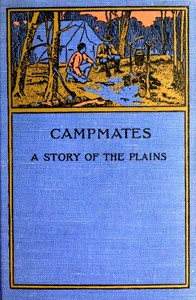
Campmates: A Story of the Plains — Context and Discussion
(0 User reviews)
475
Project Gutenberg
2010
Not confirmed
Conduct of life -- Juvenile fiction; Friendship -- Juvenile fiction; Indians of North America -- Juvenile fiction; Missing children -- Juvenile fiction; Youth -- Conduct of life -- Juvenile fiction; Diligence -- Juvenile fiction; Success -- Juvenile fiction; Outdoor life -- Juvenile fiction; Engineers -- Juvenile fiction
Readers of public-domain and historical texts
Project Gutenberg digital edition
en
Edition facts
Words
73,577
Reading time
320 min
Text sections
7
For Campmates: A Story of the Plains — Context and Discussion, the stored edition analysis reports 73,577 words, 5 hr 20 min estimated reading time, and 7 detected text sections.
The text analysis averages about 22.1 words per sentence, while the detected sections provide another way to judge how the source is divided.
Project Gutenberg metadata also associates the work with “Conduct of life -- Juvenile fiction,” connecting these edition facts with the source record’s subject description.
Source:
Project Gutenberg record #33343
Kirk Munroe's 1887 adventure follows orphan Glen and engineer's son Binney across the plains, where friendship, Indian encounters, and survival tests shape their journey. The opening's weary train ride, the middle's tense capture by Cheyennes, and later scenes of reconciliation offer a first reader clear markers of the novel's arc from hardship to camaraderie.
Read the complete public-domain text at its original source.
Read on Project GutenbergThe novel begins not with a hero but with a train—slow, rain-soaked, and weary. The opening chapter, “A Weary Ride,” establishes a mood of discomfort and delay: the track is treacherous, the season unusually wet, and the passengers restless. This setting immediately signals that the story will be grounded in physical hardship and the challenges of travel across the American frontier. The train’s sluggish pace mirrors the protagonist’s own uncertain journey, and the detailed description of the weather—rain that has “soaked the earth like a great sponge”—creates a tangible sense of place. Readers are introduced to a world where nature is an active force, not a backdrop.
From Train to Prairie: The Opening's Clues
The first chapter does more than set a mood; it introduces key elements that will recur throughout the book. The train is an “express” only by the standards of an earlier era, a detail that places the story in a specific historical moment—the early days of railroading. The rain that dominates the opening is not merely atmospheric; it foreshadows the many natural obstacles the characters will face: flooded rivers, quicksands, and snowstorms. The weary ride also hints at the protagonist’s emotional state. Though we do not yet know his name, the description of the train’s slow progress and the passengers’ discomfort suggests a journey that is both physical and emotional. The opening thus primes the reader to expect a story in which travel is arduous, nature is unpredictable, and the characters must endure.
Capture and Council: A Middle Turning Point
In the later excerpt, the narrative shifts dramatically. Glen, having been captured by Cheyennes, finds himself in a guard-house, speaking through an interpreter with a young Indian named Lame Wolf. The scene is notable for its restraint: the dialogue is straightforward, with Glen explaining the white men’s council and Lame Wolf expressing fear of being sent “far away from his own country and people.” The language is simple but effective, conveying the cultural gap and the boy’s isolation. The author avoids melodrama; instead, the tension comes from the characters’ limited understanding of each other. Glen’s promise to join Lame Wolf in a year and help him return home introduces a bond that transcends the immediate conflict. This moment, placed roughly midway through the book, redefines the stakes: the adventure is not just about survival but about forging connections across divides.
The Long Conversation: Friendship Tested
After Glen’s release, the narrative slows for a different kind of action. Riding beside Binney Gibbs, the two boys hold “a long and earnest conversation” that reveals “good qualities in the other that he had never before suspected.” This is a quiet but pivotal scene. The author uses the physical setting—the boys allowing their animals to slacken pace, falling behind the wagon train—to mirror their mental absorption in each other. The conversation is a turning point in their relationship, moving from rivalry to mutual respect. The excerpt then introduces a sudden threat: a flash of light, a mule’s unease, and the sight of “hundreds” of Indians advancing. The juxtaposition of intimate dialogue and imminent danger is characteristic of Munroe’s pacing. The reader is reminded that personal growth occurs within a larger, perilous world.
Repeated Motifs: Water, Light, and Distance
Throughout the excerpts, certain details recur. Water appears in many forms: the rain-soaked spring, the “raging torrents” of rivers, and later the “lake of ice-water” and the desert’s thirst. Light is another motif: the “dazzling ray of light” that warns Glen of the Indian approach, and the mirror-flash that signals danger. These sensory details create a cohesive texture. Distance, too, is emphasized—the train’s slow progress, the boys falling behind, the “weary journey” Lame Wolf imagines. These repeated elements give the narrative a rhythmic quality, grounding the reader in the physical realities of the plains. A first reader attentive to these patterns will find that the story’s emotional beats are often tied to the landscape and its demands.
As you read, note how the opening’s weary train sets a tone of endurance that carries through to the later scenes of capture and reconciliation. The novel rewards attention to small details—the color of a river, the flash of a mirror, the pace of a conversation. These are not mere decoration but signals of character and conflict. Let the landscape guide your expectations: when the ground is wet, trouble may follow; when the light flashes, danger is near. Munroe’s plains are not a passive setting but an active participant in the story.
The train dust of Campmates clung to me that gray afternoon, Glen's quiet endurance lingering long after the last page. That ache for a horizon, for friendship found in strange places, made me wander into the next shelf over. There it was, The Motor Boys in Mexico; Or, The Secret of the Buried City — Themes and Context, and I felt that same restless pulse beat again.
There are no reviews for this eBook.
There are no comments for this eBook.
Reader reflection
What did you think of this book?
Answer a few questions and save a private reflection on this device.
Your progress
0
/
10
2
How did the book work for you overall?
3
Would you encourage someone else to read it?
4
Did the language feel accessible?
5
How clearly were the main ideas presented?
6
Would a second reading be valuable?
7
What was the strongest part of the book?
8
Did it raise ideas you would like to talk about?
9
What did this book teach you most?
10