1

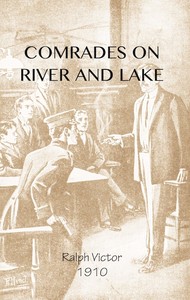
Comrades on River and Lake — A Closer Reading
(0 User reviews)
24
Project Gutenberg
2012
Not confirmed
Canoes and canoeing -- Juvenile fiction; Mystery and detective stories; Smugglers -- Juvenile fiction; Canada, Eastern -- Juvenile fiction; Champlain, Lake -- Juvenile fiction
Readers of public-domain and historical texts
Project Gutenberg digital edition
en
Edition facts
Words
54,260
Reading time
236 min
Text sections
28
Before opening Comrades on River and Lake — A Closer Reading, the edition data offers a quick orientation: 54,260 words, 3 hr 56 min estimated reading time, and 28 detected text sections.
The text analysis averages about 16.0 words per sentence, while the detected sections provide another way to judge how the source is divided.
Project Gutenberg metadata also associates the work with “Canoes and canoeing -- Juvenile fiction,” connecting these edition facts with the source record’s subject description.
Source:
Project Gutenberg record #40585
This editorial note examines the structure and movement in Ralph Victor's 1910 boys' adventure, focusing on the journey from Winton Hall to the Thousand Islands via canoe, the recurring image of canals, and the interplay between dialogue and action in the excerpts.
Read the complete public-domain text at its original source.
Read on Project GutenbergThe opening chapter of Comrades on River and Lake establishes a pattern of rapid-fire dialogue among the three chums—Fleet, Chot, and Tom—that immediately signals their camaraderie and verbal sparring. The narrative moves quickly from the Winton Hall campus to the planning of a canoe trip, with the boys' banter punctuating every decision. This conversational rhythm, where interruptions and echoes of phrases like “He’s tired of our game” create a shared language, is a structural hallmark of the excerpts. The story then shifts to a more expository mode when the boys encounter Sam, who provides a detailed, almost technical account of the canal system connecting Montreal to Lake Ontario. This juxtaposition of lively dialogue and informational passages suggests a narrative that balances character interaction with geographic and logistical detail.
The Journey as Structural Spine
The excerpts reveal that the narrative is organized around a continuous journey, with each chapter marking a new stage of travel. The table of contents lists movements from Winton Hall to Lake Champlain, down the Richelieu River, through Montreal, and toward the Thousand Islands. This linear structure is reinforced by the boys' constant references to maps, canals, and distances. The journey is not merely a backdrop but the primary driver of plot events, as seen in the detailed canal itinerary Sam recites: Lachine Canal, Soulanges Canal, Cornwall Canal, and so on. The story’s rhythm alternates between travel planning and action, such as the race and fight on the catboat mentioned in early chapter titles. The journey structure allows for a series of episodic encounters—each with its own setting and challenges—while maintaining forward momentum toward the destination.
Recurring Images: Canals and Waterways
Canals emerge as a recurring image in the excerpts, functioning both as practical routes and as symbols of the boys' navigation through unfamiliar territory. Sam’s explanation of the canal system is the most detailed instance, but the image recurs whenever the boys consult maps or discuss their route. The canals represent human intervention in the natural landscape, allowing the canoeists to bypass rapids and continue their journey. This focus on engineered waterways contrasts with the more natural settings of Lake Champlain and the Richelieu River. The French-Canadian captain’s beady eyes and short-stemmed pipe add a local color that grounds the canals in a specific cultural geography. The image of the canoe floating alongside a fishing sloop in Montreal reinforces the blend of industrial and natural elements that characterizes the boys' passage through the region.
Movement Between Scenes: From Campus to Canoe
The excerpts demonstrate a swift movement between distinct settings, often within a single chapter. The story opens in a dormitory room at Winton Hall, then shifts to the riverfront, then to a railway office where the boys study a map. Each scene change is marked by a brief transitional phrase, such as “Upon leaving Sam the boys went down to the river front.” This technique keeps the narrative pace brisk and emphasizes the boys' agency in propelling the story forward. The movement is not just physical but also tonal: the playful teasing of the opening dialogue gives way to serious planning, then to the practicalities of paying the captain and launching the canoes. The excerpts suggest that the book maintains this rhythm of scene shifts, with each new location introducing fresh characters or obstacles, such as the French-Canadian captain or the smugglers hinted at in the catalog subjects.
Dialogue as a Structuring Device
The excerpts show that dialogue carries much of the narrative weight, often advancing the plot or conveying information. The opening exchange among the chums establishes their personalities through speech patterns: Fleet is impulsive, Chot is sarcastic, Tom echoes Chot. Later, Sam’s monologue about canals delivers essential geographic data in a natural, conversational way. The dialogue also creates a sense of immediacy and presence, as when the boys interrupt each other or repeat phrases for emphasis. This reliance on spoken exchange reduces the need for descriptive passages, though brief physical details—like the captain’s “beady black eyes”—anchor the scenes. The structure of the excerpts suggests that the book uses dialogue to transition between action and exposition, with characters explaining their plans or reacting to events in real time. This technique keeps the reader engaged in the boys' perspective and decisions.
Readers approaching Comrades on River and Lake will find a story that moves as steadily as its protagonists’ canoe. The structure is driven by the journey itself, with each chapter adding a new leg or obstacle. Pay attention to how the boys’ banter reveals their relationships and how the detailed canal descriptions anchor the adventure in a real geography. The excerpts offer a clear sense of the book’s rhythm: dialogue, planning, action, and travel, repeated and varied. This is a narrative that values forward motion and practical problem-solving over introspection.
There’s something about the slow pull of a canoe through those old waterways that stays with you, long after the map’s folded away. I felt that same gentle tug reading The Girl Scouts at Camp Comalong; Or, Peg of Tamarack Hills — A Closer Reading, where the camp’s quieter hours seemed to echo that same patient, listening rhythm.
There are no reviews for this eBook.
There are no comments for this eBook.
Reader reflection
How will you remember this book?
Save your reaction, strongest insight, and memorable passage.
Your progress
0
/
10
2
Was reading this book enjoyable?
3
Would you pass this book on to a friend?
4
How much effort did this book require?
5
How valuable was this book for your own interests?
6
Did the book meet your expectations?
7
Did you relate to its people, ideas, or situations?
8
Which part made the strongest impression?
9
What changed or sharpened your thinking?
10