1

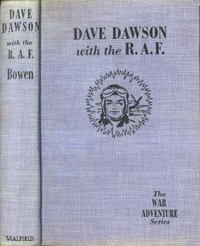
Dave Dawson with the R.A.F. — Context and Discussion
(0 User reviews)
26
Project Gutenberg
2012
Not confirmed
Spy stories; World War, 1939-1945 -- Aerial operations -- Juvenile fiction; World War, 1939-1945 -- Juvenile fiction; Air pilots, Military -- Juvenile fiction; Scouts (Reconnaissance) -- Juvenile fiction
Readers of public-domain and historical texts
Project Gutenberg digital edition
en
Edition facts
Words
50,986
Reading time
222 min
Text sections
5
For Dave Dawson with the R.A.F. — Context and Discussion, the stored edition analysis reports 50,986 words, 3 hr 42 min estimated reading time, and 5 detected text sections.
The text analysis averages about 13.1 words per sentence, while the detected sections provide another way to judge how the source is divided.
Project Gutenberg metadata also associates the work with “Spy stories,” connecting these edition facts with the source record’s subject description.
Source:
Project Gutenberg record #41715
An editorial note on R. Sidney Bowen's 1941 war adventure, examining how the catalog subjects of spy missions and aerial combat align with the text's actual focus on Dave Dawson's internal worry and the deserted Belgian landscape, rather than sustained dogfight action.
Read the complete public-domain text at its original source.
Read on Project GutenbergThe catalog subjects for Dave Dawson with the R.A.F. list spy stories, aerial operations, and reconnaissance. Yet the excerpts show a narrative that spends more time on Dawson's anxious thoughts and the eerie emptiness of the Belgian countryside than on dogfights or intelligence work. The opening chapter sets a summer idyll—"the most glorious summer the British had experienced in forty years"—before the war intrudes. This contrast between pastoral calm and imminent invasion frames the story less as a technical spy thriller and more as a psychological ordeal of waiting and searching.
The Weight of Waiting
The opening scene places Pilot Officer Dave Dawson on his back, watching clouds, in a moment of stillness. The narrator dwells on the paradox of a "perfect summer day" coexisting with war: "The warm sun, the singing birds, the flowers in bloom—and the war!" This juxtaposition recurs throughout the excerpts. When Dawson later searches for his missing friend Freddy Farmer, the landscape is described as "completely deserted land"—not a single human, dog, or farm animal. The tension comes not from action but from the absence of it: "Thoughts and arguments! Thoughts and arguments! They helped one minute, and drove him deeper into the depths of worried despair the next." The catalog subject "Scouts (Reconnaissance)" suggests active patrolling, but the text emphasizes the emotional toll of reconnaissance that yields nothing.
Voice and the American Abroad
Dawson is an American in the R.A.F., a detail the catalog does not flag. His internal monologue uses colloquial Americanisms: "Get the lead out of your pants and start going places. Don't stand here all day and mope, you fathead!" This self-abuse contrasts with the formal British military setting. The narrator also shifts into a collective British voice: "the people of the greatest empire on earth were waiting, ready to fight and die to the last man." This dual perspective—American protagonist, British cause—creates a layered patriotism. The catalog subject "World War, 1939-1945 -- Aerial operations -- Juvenile fiction" is accurate, but the excerpts show that aerial combat is often offstage; the real drama is internal and terrestrial.
Setting as Silent Character
The Belgian streets Dawson traverses are described with repetitive, almost cinematic emptiness: "Street after street was the same. It was like looking at the same picture over and over again." Houses have "drawn curtains" and "boarded up door here and there," suggesting evacuation. The only sounds are "the faint rumble of sound from the direction of the city's center" and German planes overhead. This depopulated setting amplifies Dawson's isolation. When a German squad suddenly appears—"a squad of field grey German soldiers seemed to rise right up out of the sidewalk"—the threat is immediate and physical. The catalog subject "Spy stories" implies covert activity, but the excerpts show Dawson as a lost, worried figure, not a skilled operative. The setting itself becomes the primary source of tension.
Structure and the Missing Friend
The excerpts reveal a narrative built around a central absence: Freddy Farmer. Dawson's mission to reach "Sixteen Rue Chartres" in Antwerp is driven by the hope of finding his friend. The text repeatedly asks "Where was Freddy Farmer?" and lists possibilities: "Had he been able to bail out safely? Had he landed safely? Was Freddy dead?" This refrain gives the story a mystery structure rather than a straightforward adventure arc. The catalog subject "Spy stories" might lead a reader to expect coded messages and enemy agents, but the excerpts show a protagonist whose primary goal is reunion, not intelligence gathering. The spy mission appears as a given, but the emotional core is the search for a lost comrade.
Readers approaching this as a pure spy thriller may be surprised by the introspective, almost melancholic tone of the excerpts. The catalog subjects accurately list the story's ingredients—aerial operations, reconnaissance, spy missions—but the text foregrounds Dawson's psychological state and the oppressive silence of occupied Belgium. The book rewards attention to its atmospheric details and the tension between the advertised action and the actual narrative of waiting and worry.
I keep thinking about how Dave’s worry drifts over that empty Belgian farmland, how the book’s real landscape is inside him. It reminded me of reading Dick in the Desert — Reading Notes, where the silence of the sand felt heavier than any pursuit. Both stories gave me that ache—waiting for something that never quite arrives, just quiet and the weight of being alone.
There are no reviews for this eBook.
There are no comments for this eBook.
Reader reflection
What did you think of this book?
Answer a few questions and save a private reflection on this device.
Your progress
0
/
10
2
Was reading this book enjoyable?
3
Would you encourage someone else to read it?
4
Did the language feel accessible?
5
Was the book moving at the right speed?
6
Would you like to discuss this book with someone?
7
Could you follow the author’s main argument?
8
Did the book meet your expectations?
9
What is the main idea you are taking away?
10