1

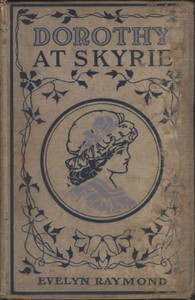
Dorothy at Skyrie — Reading Notes
(0 User reviews)
25
Project Gutenberg
2012
Not confirmed
Friendship -- Juvenile fiction; Gold mines and mining -- Juvenile fiction; Farm life -- Juvenile fiction; Families -- Juvenile fiction; Chester, Dorothy (Fictitious character) -- Juvenile fiction; Parents -- Juvenile fiction; Ponies -- Juvenile fiction; Social adjustment -- Juvenile fiction
Readers of public-domain and historical texts
Project Gutenberg digital edition
en
Edition facts
Words
63,091
Reading time
275 min
Text sections
6
The source record for Dorothy at Skyrie — Reading Notes measures this digital text at 63,091 words, 4 hr 35 min estimated reading time, and 6 detected text sections.
The text analysis averages about 16.9 words per sentence, while the detected sections provide another way to judge how the source is divided.
Project Gutenberg metadata also associates the work with “Friendship -- Juvenile fiction,” connecting these edition facts with the source record’s subject description.
Source:
Project Gutenberg record #41117
This editorial note examines how Evelyn Raymond structures Dorothy at Skyrie through recurring images of thresholds, climbing, and shadows, and traces the movement between domestic interiors and the open mountain landscape.
Read the complete public-domain text at its original source.
Read on Project GutenbergFrom its first scene, Dorothy at Skyrie establishes a pattern of arrivals and crossings. The city-bred Dorothy is startled by three girls in pink sunbonnets who appear suddenly behind a stone wall; their leader, Alfaretta Babcock, vaults over the bars with an ease that Dorothy admires. This moment—a stranger crossing a boundary into a new space—repeats throughout the excerpts. The novel’s structure depends on such thresholds: fences, doorways, and the edge of the mountain itself become sites where characters meet, negotiate, and sometimes clash.
Thresholds and First Encounters
The opening chapter introduces a recurring structural device: a character appears unexpectedly at a boundary. The Babcock sisters materialize behind a wall; later, a “fearsome-looking but wholly harmless ‘crank’” slips into the house during a storm. Each entrance disrupts the settled routine and forces a response. Dorothy’s own arrival at Skyrie is anticipated but not shown in the excerpts; instead, the reader sees her already there, searching for wild strawberries. The novel prefers to dramatize the moment of encounter rather than the journey itself. Alfaretta’s vault over the fence is described with physical precision—hands on the topmost rail, a spring—and Dorothy’s reaction (“Like a regular gymnast!”) marks her as an observer learning the local codes. These threshold scenes do more than introduce characters; they establish the novel’s interest in how people adapt to unfamiliar ground.
Climbing and Physical Competence
Alfaretta boasts that she is “the best climber anywheres on the mounting” and offers to teach Dorothy. Climbing is not merely a skill but a marker of belonging. The mountain setting demands agility, and those who possess it—like Alfaretta—command respect. Dorothy, by contrast, is “city-bred” and hesitant. The novel uses physical action to reveal character: Alfaretta’s easy vault contrasts with her sisters’ timid “hop,” and Dorothy’s gasp at their tumbles shows her unfamiliarity with rural life. Later, the blacksmith Seth Winters is described through his work: “The horses he shod never went lame, the tires of the wheels he repaired rarely loosened.” Competence in a craft or a physical feat earns social standing. The excerpts suggest that the narrative will test Dorothy’s ability to acquire such competence, though the outcome is not shown.
Shadows and Disagreement
A striking image recurs in the domestic scenes: a shadow that follows characters from room to room. After the eccentric visitor leaves, mother Martha feels “the shadow that Pa Babcock had left behind him—the shadow of almost their first disagreement.” The shadow is not literal but emotional, a visual metaphor for tension. It “followed her light footsteps and the tap-tap of his crutches from room to room.” The detail of the crutches—belonging to John, who is injured—anchors the abstraction in a physical reality. The shadow reappears when the couple pauses at Dorothy’s door: each has a private thought, and the narrative reports both, creating a split perspective. This technique of alternating viewpoints within a single scene is used sparingly but effectively, suggesting that the novel’s structure can accommodate internal conflict as well as external action.
Movement Between Interior and Exterior
The excerpts shift repeatedly between indoor and outdoor settings. The first chapter takes place in a field; later scenes move to the house, the blacksmith’s shop, and the road. The storm scene is particularly layered: the visitor enters the house, the thunder and lightning fill the room, and then the couple moves through the house securing windows. The narrative follows them “from room to room,” tracing a path that ends at Dorothy’s chamber. This movement is not random; it mirrors the emotional journey of the characters. The blacksmith’s gathering, by contrast, is outdoors: wagons fill the road and stray into the woods. The novel uses setting to modulate pace—enclosed spaces for private reflection, open spaces for community events. The reader is guided by these shifts, which create a rhythm of withdrawal and exposure.
Readers who attend to the novel’s recurring images—walls, shadows, climbing—will find a coherent pattern beneath the episodic surface. The excerpts offer only a partial view, but they suggest that Raymond uses physical details to carry emotional weight. The stone wall of the first page and the shadow of the later chapter are not decorative; they are structural. Watching how Dorothy moves through these spaces, and how others move around her, may be the most rewarding way to follow the story.
That rainy afternoon, Dorothy’s quiet thresholds—her moments of pausing before climbing—stayed with me longer than the mountain scenery. I wanted that same unhurried courage somewhere else, and my hand drifted to an old favorite about campfire girls learning to wait behind the lines. The shadows felt familiar there, too. The Camp Fire Girls Behind the Lines — Inside the Classic became my dry porch for the rest of the storm.
There are no reviews for this eBook.
There are no comments for this eBook.
Reader reflection
How will you remember this book?
Save your reaction, strongest insight, and memorable passage.
Your progress
0
/
10
2
How did the book work for you overall?
3
How likely are you to recommend this book?
4
How demanding did the text feel?
5
Did it raise ideas you would like to talk about?
6
Which element worked best for you?
7
Did the book offer a fresh perspective?
8
How would you describe its reading pace?
9
What did this book teach you most?
10