1

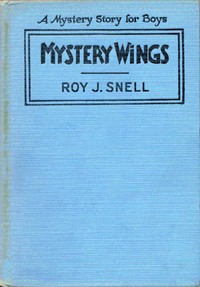
Mystery Wings A Mystery Story for Boys — Story, Setting & Ideas
(0 User reviews)
1023
Project Gutenberg
2013
Not confirmed
Mystery and detective stories; Chinese -- Juvenile fiction; Airplanes -- Juvenile fiction; Baseball stories; Laboratories -- Juvenile fiction
Readers of public-domain and historical texts
Project Gutenberg digital edition
en
Edition facts
Words
43,040
Reading time
188 min
Text sections
6
Mystery Wings A Mystery Story for Boys — Story, Setting & Ideas can be approached with a clearer sense of reading commitment from its source measurements: 43,040 words, 3 hr 8 min estimated reading time, and 6 detected text sections.
The text analysis averages about 10.3 words per sentence, while the detected sections provide another way to judge how the source is divided.
Project Gutenberg metadata also associates the work with “Mystery and detective stories,” connecting these edition facts with the source record’s subject description.
Source:
Project Gutenberg record #43904
In this 1935 boys' adventure, Johnny Thompson encounters a mysterious Chinaman named Tao Sing who knows his secret thoughts, while a thought-camera, a hidden battery and tube, and a dubious land deal with Big Bill Tyson set the stage for a mystery involving baseball, Chinese philosophy, and federal agents.
Read the complete public-domain text at its original source.
Read on Project GutenbergFrom its opening line—'Pardon, my young friend!'—Roy J. Snell's Mystery Wings establishes a tone of sudden encounter and hidden knowledge. The story begins in a dark park where Johnny Thompson is startled by a small Chinaman, Tao Sing, who claims to read his mind. Tao Sing's speech is marked by a 'slow easy drawl' and a face that 'crinkle[s] and crackle[s] like very old parchment,' a description that blends the exotic with the mechanical. This early scene sets up a pattern of contrasts: the familiar (baseball, small-town rivalries) and the strange (a thought-camera, a 'Place of Great Magic'), the open and the concealed.
A Mind-Reading Chinaman and a Thought-Camera
The figure of Tao Sing is the story's most distinctive element. He appears without warning, speaks in riddles, and knows Johnny's secret worries about a new pitcher. Johnny's reaction—'Who's afraid of a Chinaman?'—is a phrase he knows better than 'Who's afraid of the big bad wolf?' This casual racism is undercut by Tao Sing's uncanny accuracy. The narrative soon introduces a 'thought-camera,' a device that can capture images from a person's mind. Johnny obtains it from a deserted bungalow, along with a battery and a bright tube. These objects link Tao Sing to a larger mystery involving 'Federal agents' and a Chinese philosopher named Wung Lu. The thought-camera is never fully explained in the excerpts; its workings remain as opaque as Tao Sing's motives.
Baseball, Money, and a Dubious Contract
Alongside the supernatural elements, the story is grounded in a concrete financial problem. Johnny, his friend Doug, and old Professor George sign a contract with Big Bill Tyson to buy baseball grounds. The price seems fair, but the editor C.K. reveals a catch: the contract demands four thousand dollars in sixty days, a sum that will 'clean out' the professor. The signing scene is charged with unease—a cloud passes over the sun, and Big Bill's face becomes 'a mask.' The language of the contract is precise: 'Four thousand dollars in sixty days, five thousand more in three years.' This legal trap contrasts sharply with the vague, mystical knowledge Tao Sing offers. The tension between visible deals and hidden threats runs through both plotlines.
Contrasts in Voice and Setting
Snell's prose shifts between colloquial dialogue and atmospheric description. Tao Sing speaks in a 'slow easy drawl' and uses formal phrasing ('It is written, I shall be your friend'), while Johnny thinks in slang ('all of a heap'). The settings reinforce these contrasts: the dark park and the shadowy bungalow versus the bright, open ball field. The 'Place of Great Magic' (a chapter title) is never described in the excerpts, leaving its nature ambiguous. Similarly, the 'mystery ship' and 'strange passengers' hinted at in chapter titles remain unexplored. The excerpts end with Johnny hiding the thought-camera 'at the bottom of his trunk,' a gesture that suggests secrets buried beneath everyday life. The story's world is one where the ordinary and the extraordinary coexist uneasily.
Readers should pay close attention to the way Snell uses objects—the thought-camera, the battery, the contract—as both plot devices and symbols of hidden knowledge. The excerpts offer only fragments of the larger mystery, leaving Tao Sing's true nature and the purpose of the 'mystery wings' unresolved. The story rewards a careful reading of its early chapters, where every detail may prove a clue.
There's a certain warmth in old mysteries, a trust in unseen signals. Johnny's thought-camera in Mystery Wings always reminded me of that, how a boy’s quiet faith in gadgets mirrors our own longing to be understood. That same patient hum lives in The Radio Detectives Under the Sea — Text and Context, a fellow traveler in the dark, listening.
There are no reviews for this eBook.
There are no comments for this eBook.
Reader reflection
How will you remember this book?
Save your reaction, strongest insight, and memorable passage.
Your progress
0
/
10
2
How did the book work for you overall?
3
Would you encourage someone else to read it?
4
How demanding did the text feel?
5
How clearly were the main ideas presented?
6
Did the book deliver what you hoped for?
7
What did you think about the pace?
8
Did you relate to its people, ideas, or situations?
9
What did this book teach you most?
10