1

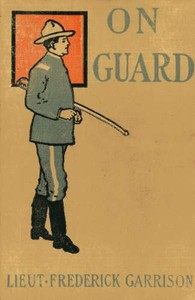
On Guard: Mark Mallory's Celebration — Key Ideas to Explore
(0 User reviews)
484
Project Gutenberg
2011
Not confirmed
Conduct of life -- Juvenile fiction; Friendship -- Juvenile fiction; Revenge -- Juvenile fiction; Adventure and adventurers -- Juvenile fiction; Students -- Juvenile fiction; Youth -- Conduct of life -- Juvenile fiction; Soldiers -- Juvenile fiction; Courage -- Juvenile fiction; United States Military Academy -- Juvenile fiction; Fighting (Psychology) -- Juvenile fiction; Hate -- Juvenile fiction
Readers of public-domain and historical texts
Project Gutenberg digital edition
en
Edition facts
Words
63,608
Reading time
277 min
Text sections
7
Before opening On Guard: Mark Mallory's Celebration — Key Ideas to Explore, the edition data offers a quick orientation: 63,608 words, 4 hr 37 min estimated reading time, and 7 detected text sections.
The text analysis averages about 13.4 words per sentence, while the detected sections provide another way to judge how the source is divided.
Project Gutenberg metadata also associates the work with “Conduct of life -- Juvenile fiction,” connecting these edition facts with the source record’s subject description.
Source:
Project Gutenberg record #36101
Upton Sinclair's 1903 West Point adventure follows cadet Mark Mallory as he navigates accusations of cheating, rivalries among classmates, and a plot to expel him. The narrative moves between tent inspections, formal hearings, and midnight confrontations, using repeated motifs of letters, honor, and counter-schemes.
Read the complete public-domain text at its original source.
Read on Project GutenbergThe story opens not with a parade ground or a classroom, but with a letter. Cadet Mark Mallory, a plebe at West Point, receives a note from a friend on furlough, and the plot is set in motion from inside a tent on B Company Street. Sinclair builds the novel around such small, enclosed spaces—tents, offices, hospital rooms—where conversations and confrontations unfold. The cadets are identified by nicknames like “Texas” and “Bull,” and the dialogue carries a clipped, military briskness. The author, writing under the pseudonym Lieut. Frederick Garrison, leans heavily on the cadets’ code of honor and their constant vigilance against both external enemies and internal betrayals.
Letters as Triggers
The narrative repeatedly pivots on the arrival or discovery of a letter. Chapter I begins with Mark receiving a letter from Wicks Merritt, which he reads aloud to his tent-mates. Later, a printer’s boy named Nick testifies that Mark bribed him to steal examination papers—a claim Mark denies. The accusation itself is delivered as a story within a story, told first to the superintendent and then repeated in the hearing. Letters and written evidence function as both plot devices and symbols of the trust that can be broken or upheld. The cadets’ world is one where a single piece of paper can ruin a reputation, and where reading someone else’s mail is a form of attack.
The Geometry of Confrontation
Sinclair stages key scenes as triangular or multi-person standoffs. In the superintendent’s office, Mark faces Colonel Harvey, the squire, Benny Bartlett, and the printer’s boy Nick. The room becomes a stage: the colonel taps a bell, a door opens, and new accusers enter. Mark is positioned as the lone defendant, “glued to the spot” while others speak. The author uses physical placement—who stands, who sits, who enters—to map the power dynamics. Earlier, in the tent, the cadets gather in a circle to hear the letter, a more democratic arrangement. The contrast between open tent gatherings and closed-door hearings reinforces the theme of surveillance and judgment.
Recurring Motifs of Vigilance
The title On Guard is literal: cadets are constantly watching, listening, and preparing for attack. Mark is described as “gazing inquiringly” out of a tent door; Texas appears in the doorway “watching his friend with interest.” The morning ritual of “sprucing up” is followed by inspection, a formal check of readiness. Even casual conversation is framed as reconnaissance. When Mark overhears a plot, he immediately devises a “counterplot.” The language of military readiness pervades every interaction. Sinclair does not let the reader forget that these are soldiers in training, where a lapse in attention can mean expulsion—or worse, dishonor.
Movement Between Public and Private Spaces
The action shifts between the semi-public tent street, the private tent interior, the formal superintendent’s office, and later the hospital. Each space carries different rules. In the tent, cadets speak freely; in the office, every word is recorded and judged. The hospital, mentioned in a chapter title, suggests a place of recovery but also of isolation. Sinclair uses these transitions to control the flow of information: what is whispered in a tent is repeated in a hearing, and what is declared in an office is later contested in a midnight prowl. The reader moves with Mark from one space to another, always aware that walls have ears and that no conversation is truly private.
Readers attentive to the cadets’ nicknames and the precise geography of West Point’s summer camp will find the story’s tensions amplified. Sinclair’s pseudonymous series rewards those who track who knows what and when. The novel does not resolve all questions of guilt or innocence by the excerpts given, but it consistently returns to the idea that honor must be defended in both word and deed.
That old West Point story about honor and whispered accusations lingered with me long after the final chapter. Something about how letters and secrets shape our choices felt achingly familiar. I thought of that gentle mystery with Penny Nichols after finishing it, the one where a lost key unlocks far more than a door. Penny Nichols and the Mystery of the Lost Key — Story, Setting & Ideas carries that same quiet ache, I think. It stays close, like a memory you’re not ready to put down.
There are no reviews for this eBook.
There are no comments for this eBook.
Reader reflection
What was your reading experience?
Capture what you thought, learned, and would like to remember.
Your progress
0
/
10
2
What was your overall reaction to the book?
3
How likely are you to recommend this book?
4
What was the reading difficulty like?
5
Did this book create an emotional response?
6
How did the pace of the book feel?
7
Which aspect of the book did you value most?
8
Did the book give you something worth debating?
9
In one sentence, what did you learn?
10