1

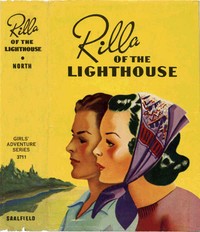
Rilla of the Lighthouse — Reading Companion
(0 User reviews)
1028
Project Gutenberg
2013
Not confirmed
Bildungsromans; New England -- Juvenile fiction; Lighthouses -- Juvenile fiction; Identity (Philosophical concept) -- Juvenile fiction; Reunions -- Juvenile fiction
Readers of public-domain and historical texts
Project Gutenberg digital edition
en
Edition facts
Words
71,486
Reading time
311 min
Text sections
10
Before opening Rilla of the Lighthouse — Reading Companion, the edition data offers a quick orientation: 71,486 words, 5 hr 11 min estimated reading time, and 10 detected text sections.
The text analysis averages about 18.7 words per sentence, while the detected sections provide another way to judge how the source is divided.
Project Gutenberg metadata also associates the work with “Bildungsromans,” connecting these edition facts with the source record’s subject description.
Source:
Project Gutenberg record #43414
Grace May North's 1926 novel opens with Rilla, a wind-blown girl and her dog Shags on a New England beach, speaking in a salty dialect. The story follows her from lighthouse life to boarding school, where her identity as a lighthouse-keeper's granddaughter sparks class conflict. Excerpts reveal a shift from coastal adventure to social drama, with Muriel Storm (Rilla) facing snobbery at High Cliff Seminary. The narrative uses dialect, storm imagery, and a mystery box to build a coming-of-age tale
Read the complete public-domain text at its original source.
Read on Project GutenbergFrom its first page, Rilla of the Lighthouse anchors itself in a specific coastal voice. Rilla calls to her dog Shags in a dialect thick with nautical terms: “Ahoy, thar, Shagsie! Here comes a crashin’ big wave.” The opening scene places them on a pebbly beach beneath Windy Island Lighthouse, a “severe in outline, but glaring red and white” structure. The language is immediate and sensory—breakers crash, the dog barks furiously, and Rilla’s “hazel eyes glowing with excitement” set a tone of eager adventure. This is not a generic seaside story; the details of shoals, fog, and the keeper Captain Ezra Bassett root the tale in a working lighthouse world.
A Voice Shaped by the Sea
The excerpts show a deliberate choice in dialect. Rilla’s speech—“Like it’s a treasure from a ship that’s gone down”—is not merely decorative; it signals her isolation and her deep connection to the maritime environment. The narrator uses standard English, but Rilla’s lines are rendered phonetically (“tarnal whopper,” “sure sartin”). This contrast becomes a plot point later, when boarding school girls criticize Muriel Storm (the name Rilla adopts) for not speaking “the English language correctly.” The dialect is not just local color; it is a marker of class that the story interrogates. Readers should note how the voice shifts when Rilla moves to High Cliff Seminary—her internal narration may adapt, but her origins remain a source of tension.
The Lighthouse as Character and Catalyst
Windy Island Lighthouse is more than a setting. The opening describes it as “severe in outline, but glaring red and white,” a functional beacon for “pilots who were strangers in those dangerous waters.” The excerpts reveal that the lighthouse is also a home: Rilla lives there with her grandfather, Captain Ezra. Later, a storm destroys the lighthouse, killing the captain and injuring Rilla. This event propels her to the city hospital and then to High Cliff Seminary. The lighthouse thus serves as both a safe haven and a point of rupture. Its destruction is a turning point, forcing Rilla into a new world. The recurring motif of storms—both literal and social—ties the physical setting to the emotional arc.
Social Hierarchies at High Cliff Seminary
The middle excerpt shifts sharply from adventure to social drama. At High Cliff, Muriel (Rilla) is discussed by other girls in terms of her background: “a lighthouse-keeper’s grand-daughter” and “a charity pupil.” The dialogue reveals a rigid class system. Adelaine Stuart boasts of her “family tree,” while Faith Morley reluctantly shares Muriel’s story. The girls’ conversation exposes their prejudices: they are “horrified” that Muriel cannot speak “correctly,” and they debate whether to associate with her. Notably, Marianne Carnot, who met Muriel on Windy Island, hides that connection and harbors resentment. This section shows the novel turning from external adventure to internal conflict, as Muriel navigates snobbery and grief.
Mystery Objects and Unfinished Stories
Several excerpts hint at objects that carry narrative weight. In the opening, Shags retrieves a “treasure from a ship that’s gone down,” though a wave washes it away. The table of contents lists chapters like “A Gift From the Sea” and “The Blue Jewels,” suggesting that physical items—perhaps a box or jewels—drive the plot. The excerpts do not reveal the contents or resolution, but these objects likely connect to Rilla’s identity and family history. Readers should watch for how these items function: as clues to her past, as sources of conflict, or as symbols of belonging. The incomplete information invites speculation without confirming outcomes.
As you read, pay attention to how the novel balances its two halves: the wild, dialect-rich lighthouse chapters and the more conventional boarding school drama. The excerpts suggest that Rilla’s identity is tested not by physical danger but by social scrutiny. Notice how the author uses weather—storms, fog, crashing waves—to mirror emotional states. The mystery of the box and the blue jewels may tie the two worlds together. Approach the story as a layered coming-of-age narrative where the sea and the school are equally formative.
I found myself thinking back to Rilla of the Lighthouse — Reading Companion the other day, wondering at how a girl shaped by salt and solitude adjusts to classroom whispers. There’s a particular ache in that transition, the sea-toughened spirit meeting polished sneers. It reminded me, strangely, of another island tale, where survival matters more than social standing: The Girl Crusoes: A Story of the South Seas — Background and Themes. Both girls carry that same quiet, stubborn independence.
There are no reviews for this eBook.
There are no comments for this eBook.
Reader reflection
Your personal reading reflection
Build a private reading journal entry for this title.
Your progress
0
/
10
2
Was reading this book enjoyable?
3
Would you encourage someone else to read it?
4
Did the language feel accessible?
5
Did the book give you something worth debating?
6
Did anything about the book feel genuinely new?
7
How much did the book move you?
8
Do you expect to return to this book?
9
Which lesson or insight stayed with you?
10