1

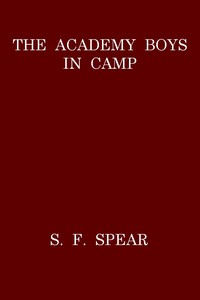
The Academy Boys in Camp — Reading Notes
(0 User reviews)
376
Project Gutenberg
2010
Not confirmed
Conduct of life -- Juvenile fiction; Children -- Conduct of life -- Juvenile fiction; Friendship -- Juvenile fiction; Camping -- Juvenile fiction; Natural history -- Juvenile fiction; Students -- Juvenile fiction; Outdoor life -- Juvenile fiction; Preparatory school students -- Juvenile fiction; School camps -- Juvenile fiction
Readers of public-domain and historical texts
Project Gutenberg digital edition
en
Edition facts
Words
47,655
Reading time
208 min
Text sections
8
This digital edition of The Academy Boys in Camp — Reading Notes is described by source-level measurements including 47,655 words, 3 hr 28 min estimated reading time, and 8 detected text sections.
The text analysis averages about 14.1 words per sentence, while the detected sections provide another way to judge how the source is divided.
Project Gutenberg metadata also associates the work with “Conduct of life -- Juvenile fiction,” connecting these edition facts with the source record’s subject description.
Source:
Project Gutenberg record #33968
In this 1909 boys' adventure, a torn textbook triggers a crisis of conscience at Massillon Academy. Ralph Drayton's confession and flight with Ben Carver lead to a camp on Whaleback, where natural history and outdoor life test the boys' honor and friendship. The narrative contrasts school discipline with the freedoms and dangers of Cape Cod's coast.
Read the complete public-domain text at its original source.
Read on Project GutenbergThe torn pages of a Greek textbook set the story in motion. When Mr. Bernard discovers that all fifteen copies of the Anabasis have been mutilated, he calls a roll of honour, demanding each boy answer on his word. Eighty-five voices ring out with a clear 'No!'—but the teacher's keen gray eyes settle on Joe Chester, whose guilty look is not guilt but burdened knowledge. The real culprit, Ralph Drayton, later confesses in a letter: 'I did the mischief, and was afraid to tell.' That confession, written with a scowl and a dip of the pen, sends Ralph and his friend Ben Carver fleeing into the night, their boots in hand, creeping past creaking stairs into the darkness of Cape Cod.
A Confession Written in Ink and Fear
Ralph Drayton's letter to Mr. Bernard is the emotional hinge of the opening chapters. Written hastily on a card, it admits the vandalism and exonerates Ben Carver, who 'knew about it, but did not do it.' The postscript—'I was never sorrier in my life'—reveals a boy wrestling with his own conscience. The act of writing is itself a turning point: Ralph refuses to read the letter over, asking Ben to seal it. This small detail underscores his shame and his desire to put the confession out of sight. The letter also introduces a pattern of moral reckoning that runs through the excerpts: the roll-call on honour, the teacher's search for a liar, and Ralph's nightmare of being held underwater as punishment for lying. The text treats truth-telling not as a simple rule but as a difficult, embodied struggle.
Flight by Starlight and Creaking Stairs
The escape from Massillon Academy is rendered in precise, sensory detail. Ralph and Ben wait until after midnight, then 'take our boots in our hands and just crawl' down stairs that 'creaked unmercifully, as if in a league to betray them.' The moon is down; only stars light their path through the garden and over the fence toward the shore. They hide under the outside stairs of a sail-loft, waiting impatiently for daylight. The setting—a Cape Cod wharf with vessels manned by sleeping crews—grounds the adventure in a specific geography. The boys' flight is not romanticized: they are cold, uncomfortable, and afraid. Every bush might hide an arresting hand. This tension between the thrill of escape and the anxiety of pursuit gives the opening chapters a taut, atmospheric quality.
The Teacher's Gaze and the Burden of Knowledge
Mr. Bernard is no mere authority figure; his 'slow, sweeping glance of the keen gray eyes' searches every boyish face. He reads Joe Chester's confusion not as guilt but as the weight of knowing the offender. The teacher's method—calling the roll on honour, then asking 'Is it possible that we have a liar amongst us?'—creates a moral pressure that drives the plot. The boys respond with a laugh, indignation, or excitement, but the teacher's quiet scrutiny exposes the gap between public bravado and private conscience. This dynamic recurs in Ralph's nightmare, where Mr. Bernard becomes a punishing figure trying to 'wash off the sin' of lying. The excerpts suggest that the story is as much about internal moral conflict as about outdoor adventure, with the teacher's gaze lingering even after the boys have fled.
Readers approaching The Academy Boys in Camp will find a story that balances classroom ethics with wilderness survival. The excerpts offer only the first chapters; the full text likely develops the camping, natural history, and school-camp dynamics hinted at in the table of contents. Pay attention to how the boys' moral choices—confession, flight, loyalty—echo in their outdoor experiences. The contrast between the disciplined schoolroom and the unpredictable Cape Cod coast is a thread worth following.
I remember the summer I first read about Ralph's torn textbook, the quiet weight of confession pressing on him like humidity before a storm. It stirred something in me—that ache of wanting to be honest when it costs everything. Years later, The Radio Detectives Under the Sea — Text and Context brought back that same hush, that underwater stillness where choices surface slowly, testing what we carry.
There are no reviews for this eBook.
There are no comments for this eBook.
Reader reflection
What was your reading experience?
Capture what you thought, learned, and would like to remember.
Your progress
0
/
10
2
Did this book hold your interest?
3
Would you encourage someone else to read it?
4
What was the reading difficulty like?
5
How much did the book move you?
6
What did you appreciate most?
7
Did the book give you something worth debating?
8
Do you expect to return to this book?
9
Which lesson or insight stayed with you?
10