1

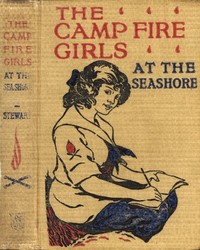
The Camp Fire Girls at the Seashore; Or, Bessie King's Happiness — Key Ideas to Explore
(0 User reviews)
270
Project Gutenberg
2010
Not confirmed
Camp Fire Girls -- Juvenile fiction; Girls -- Societies and clubs -- Juvenile fiction; Mystery and detective stories; Boats and boating -- Juvenile fiction; Inheritance and succession -- Juvenile fiction
Readers of public-domain and historical texts
Project Gutenberg digital edition
en
Edition facts
Words
42,092
Reading time
184 min
Text sections
4
The Camp Fire Girls at the Seashore; Or, Bessie King's Happiness — Key Ideas to Explore can be approached with a clearer sense of reading commitment from its source measurements: 42,092 words, 3 hr 4 min estimated reading time, and 4 detected text sections.
The text analysis averages about 14.1 words per sentence, while the detected sections provide another way to judge how the source is divided.
Project Gutenberg metadata also associates the work with “Camp Fire Girls -- Juvenile fiction,” connecting these edition facts with the source record’s subject description.
Source:
Project Gutenberg record #34443
In this sixth volume of the Camp Fire Girls series, Bessie King and her friends face a campfire disaster, a tense yacht race, and shifting loyalties. The story contrasts cheerful resilience with moments of bitter rivalry, using the seaside setting to test both sailing skill and character.
Read the complete public-domain text at its original source.
Read on Project GutenbergThe novel opens not with a tranquil seaside idyll but with a scene of wreckage: the Manasquan Camp Fire’s camp has been nearly destroyed by a fire during the night. Yet the girls respond with laughter and efficient sorting of salvageable items, a tone that sets the pattern for the book’s blend of disaster and determined cheerfulness. Eleanor Mercer, the Guardian, briskly decides to burn the rubbish and start a new fire, while Bessie King throws herself into the work. The opening establishes a community that meets setbacks with practical action and humor, but the excerpts also hint at tensions beneath the surface—particularly in the later yacht race, where rivalry and poor sportsmanship emerge.
From Ashes to Action
The first chapter, titled “From the Ashes,” immediately establishes the Camp Fire girls’ resourcefulness. After a fire destroys their camp, the girls sort ruined items from salvageable ones, and Eleanor Mercer declares, “There’s no sort of use in keeping any of this rubbish.” The narrative emphasizes collective effort and quick decision-making. Bessie King is shown working alongside others, and the dialogue reveals a hierarchy of ranks—Wood-Gatherers, Fire-Makers, Torch-Bearers—that structures the group. The scene is brisk, with no dwelling on loss; instead, the focus is on rebuilding. This opening contrasts sharply with the later yacht race, where individual skill and luck play a larger role, and where emotional reactions are more complex.
The Wind-Shift Victory
The yacht race between the Eleanor and the Defiance is a set piece that showcases the author’s attention to sailing details. Dolly Ransom, steering the Eleanor, exploits a shift in wind to overtake Gladys’s Defiance, which is becalmed. The description is precise: “a quarter of a mile between them,” “a little puff of wind,” and the final “slipping through the water as if some invisible force had been dragging her.” The race is not just a contest of speed but of strategy and patience. Dolly’s victory is attributed to her cleverness in finding wind, yet she herself calls it “a trick.” The scene underscores the role of chance and skill in equal measure, and the reactions afterward reveal character: Dolly is gracious, Gladys is bitter, and Mary Turner is embarrassed by her friend’s behavior.
Grace and Resentment After the Race
After the race, the dialogue shifts from action to emotional fallout. Dolly calls out to Gladys, “That was bad luck. You really deserved to win,” but Gladys responds with accusations of trickery. Mary Turner apologizes for Gladys’s poor sportsmanship, while Dolly defends Gladys, noting that “it’s very easy to be nice and generous when you’ve won; it’s much harder to be fair when you’ve lost.” This exchange highlights a central tension in the excerpts: the contrast between public graciousness and private resentment. The narrative does not resolve the conflict; instead, it leaves Gladys sulking and Mary ashamed. The scene suggests that the Camp Fire ideals of camaraderie are tested by competition, and that the girls’ responses to victory and defeat reveal deeper aspects of their personalities.
Readers attentive to the interplay of teamwork and rivalry will find much to observe in these excerpts. The opening disaster and the yacht race both hinge on how characters react to circumstances beyond their control—a fire, a shift in wind. The book appears to value resilience and good sportsmanship, but it also gives space to less admirable emotions. Pay attention to how the narrative handles the tension between the Camp Fire’s stated ideals and the characters’ actual behavior; the excerpts suggest that the story is as much about human nature as about seaside adventures.
There’s something about seaside summers that brings out both the best and the prickliest in friendships, isn’t there? That quiet ache in The Camp Fire Girls at the Seashore—how loyalty shifts with the tide—stayed with me long after. It reminded me of another coastal story, where watching parades and racing yachts hides similar little storms of the heart. The Automobile Girls at Newport; Or, Watching the Summer Parade — Edition Insights holds that same gentle bittersweetness, like a photograph fading softly at the edges.
There are no reviews for this eBook.
There are no comments for this eBook.
Reader reflection
What was your reading experience?
Capture what you thought, learned, and would like to remember.
Your progress
0
/
10
2
Did this book hold your interest?
3
How likely are you to recommend this book?
4
How easy was the book to follow?
5
Was the book moving at the right speed?
6
Did it raise ideas you would like to talk about?
7
Was the book easy to understand?
8
Which aspect of the book did you value most?
9
What is the main idea you are taking away?
10