1

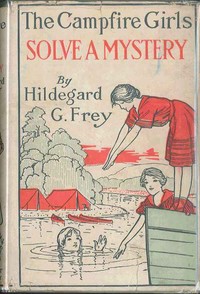
The Camp Fire Girls Solve a Mystery; Or, The Christmas Adventure at Carver House — Reading Notes
(0 User reviews)
19
Project Gutenberg
2012
Not confirmed
Family -- Juvenile fiction; Camp Fire Girls -- Juvenile fiction; Mystery and detective stories; Clubs -- Juvenile fiction; Prudence -- Juvenile fiction; Thoughtfulness -- Juvenile fiction
Readers of public-domain and historical texts
Project Gutenberg digital edition
en
Edition facts
Words
57,821
Reading time
252 min
Text sections
8
The Camp Fire Girls Solve a Mystery; Or, The Christmas Adventure at Carver House — Reading Notes can be approached with a clearer sense of reading commitment from its source measurements: 57,821 words, 4 hr 12 min estimated reading time, and 8 detected text sections.
The text analysis averages about 15.7 words per sentence, while the detected sections provide another way to judge how the source is divided.
Project Gutenberg metadata also associates the work with “Family -- Juvenile fiction,” connecting these edition facts with the source record’s subject description.
Source:
Project Gutenberg record #38983
In this 1919 Camp Fire Girls installment, Katherine Adams arrives in Oakwood two days before Christmas to find her friend Nyoda missing, launching a holiday mystery centered on an empty house, secret passages, and the eccentric Hercules, whose superstitions and rheumatism remedies add comic relief.
Read the complete public-domain text at its original source.
Read on Project GutenbergThe story opens with Katherine Adams stepping off a train in Oakwood two days before Christmas, expecting to be met by her friend Nyoda. Instead, she finds herself alone on a crowded platform, surrounded by soldiers home for the holiday and families reuniting. The scene establishes a pattern of expectation and delay that runs through the book: characters wait, wonder, and puzzle over what has happened. The narrative voice shifts between Katherine’s quiet observation and the lively banter of the Winnebagos once they assemble. Early chapters introduce Hercules, an elderly servant whose superstitions—he believes geraniums are unlucky because a goat died the day he planted them—and his habit of drinking coffee “gradual” to cure his “mizry” provide a comic counterpoint to the mystery plot.
Waiting and Misunderstanding
The first chapter establishes a motif of waiting and misinterpretation. Katherine stands under an arc light, watching the crowd thin, and only gradually realizes Nyoda is not coming. The narrator notes her “puzzled wonder” and her momentary panic that she has gotten off at the wrong station. This small crisis of confidence recurs throughout the excerpts: characters repeatedly misread situations, from Hercules’s fear of the devil entering through a secret passage to the girls’ initial hope that Sylvia’s injury can be cured. The text uses these moments to build suspense without relying on overt danger. The train station scene, with its “tidal wave” of greetings and soldiers, also anchors the story firmly in a specific historical moment—the end of World War I—without dwelling on the war itself.
Hercules and the Household
Hercules is the most vividly drawn character in the excerpts. His speech is rendered in dialect: “I got the mizry so bad it’s jest tearin’ me ter pieces.” He treats rheumatism with hot coffee and foot baths, refuses geraniums because they are “powerful unlucky,” and mourns a goat that was killed years earlier. Nyoda calls him “a character” and laughs at his notions, but the girls also show him kindness—Migwan suggests inviting him to Sylvia’s birthday party to cheer him up. This blend of humor and sympathy is typical of the book’s tone. The household scenes, with their kitchen banter and concern for Hercules’s feelings, contrast sharply with the medical verdict that follows. The old man’s superstitions about secret passages also tie directly into the mystery plot, as the girls discover a hidden staircase and try to keep it from him.
Sudden Verdict and Stricken Silence
Chapter XII delivers a sharp tonal shift. The “eminent surgeon” pronounces that Sylvia will never walk again: “The nerves which control the limbs are paralyzed.” The narrative describes the Winnebagos as “stunned” and “mute,” and Sylvia becomes a “white-faced, pitiful little ghost of a princess.” The language is melodramatic but effective—the girls’ “rosy air castles” collapse, and Sylvia’s “song” is “stricken upon her lips.” This moment is the emotional core of the excerpts, and it raises questions the text does not fully answer here: will the mystery provide a cure? Does the Christmas setting promise a reversal? The abruptness of the verdict, coming after the lighthearted kitchen scenes, underscores the book’s willingness to introduce genuine sorrow into a series otherwise focused on adventure and camaraderie.
Readers should pay attention to how the book balances its two tones: the comic, dialect-rich interactions with Hercules and the serious medical crisis facing Sylvia. The secret passage and the empty house of the title may or may not connect to the paralysis plot; the excerpts leave that unclear. What is evident is the author’s interest in the group’s collective response to trouble—how the Winnebagos rally, joke, and plan parties even as disaster looms. This tension between festivity and fear gives the story its particular texture.
Reading about Katherine arriving in Oakwood two days before Christmas, I remembered sitting by the train window myself that cold, quiet year, chasing a different sort of mystery. That feeling of arriving somewhere familiar yet changed—it lingered when I later opened The Camp Fire Girls at the End of the Trail — A Reader’s Guide. Both books carry that hush before something is discovered.
There are no reviews for this eBook.
There are no comments for this eBook.
Reader reflection
What did you think of this book?
Answer a few questions and save a private reflection on this device.
Your progress
0
/
10
2
What was your overall reaction to the book?
3
Would you pass this book on to a friend?
4
How easy was the book to follow?
5
What did you appreciate most?
6
Would you like to discuss this book with someone?
7
Could you see yourself revisiting this book?
8
What did you think about the pace?
9
What changed or sharpened your thinking?
10