1

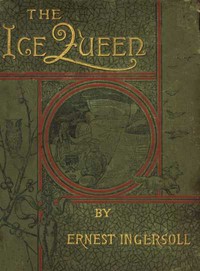
The Ice Queen — Story, Setting & Ideas
(0 User reviews)
329
Project Gutenberg
2012
Not confirmed
Christian life -- Juvenile fiction; Dogs -- Juvenile fiction; Conduct of life -- Juvenile fiction; Children -- Conduct of life -- Juvenile fiction; Islands -- Juvenile fiction; Camping -- Juvenile fiction; Ship captains -- Juvenile fiction; Christmas -- Juvenile fiction; Skating -- Juvenile fiction
Readers of public-domain and historical texts
Project Gutenberg digital edition
en
Edition facts
Words
49,921
Reading time
218 min
Text sections
8
The catalog record for The Ice Queen — Story, Setting & Ideas provides practical reading context through 49,921 words, 3 hr 38 min estimated reading time, and 8 detected text sections.
The text analysis averages about 19.7 words per sentence, while the detected sections provide another way to judge how the source is divided.
Project Gutenberg metadata also associates the work with “Christian life -- Juvenile fiction,” connecting these edition facts with the source record’s subject description.
Source:
Project Gutenberg record #39210
Three siblings—Aleck, Kate, and The Youngster—skate across a frozen lake to a lighthouse, but shifting ice and a sudden thaw trap them on an ice floe. Survival depends on their wits, a dog named Rex, and the stories of Dr. Dasent.
Read the complete public-domain text at its original source.
Read on Project GutenbergThe story opens with three siblings—Aleck, a brass foundry worker of eighteen; his sister Kate, two years younger; and their twelve-year-old brother called The Youngster—trudging home in the December dusk after a skating expedition to a lighthouse. The narrative quickly establishes a pattern of self-reliance: the children are thrown upon their own resources, and their ages and skills are precisely given, grounding the adventure in practical detail.
Ingersoll’s prose is direct and descriptive, focusing on the physical challenges of ice, cold, and isolation. The excerpts show a careful attention to the mechanics of survival—building fires, fishing, navigating by compass—and a recurring tension between the children’s competence and the unpredictable environment. The dog Rex appears as a capable companion, and the children’s education is woven into their pastimes, such as spelling competitions using Dr. Dasent’s book.
Ice as a Living Terrain
The lake ice is not a static surface but a dynamic, threatening presence. In the excerpts, the children camp against an ice wall, build a tent-house under a hummock, and later hear the ice crack with reports like cannon fire. The breaking up of the ice is described with precise sensory details: a loud, sharp noise, then a second, then a third, and a fourth crash that makes the house tremble. The ice shifts from solid field to open water and slush within a day, forcing the children to adapt constantly. This treatment of ice as an active, almost sentient obstacle distinguishes the story from a simple survival tale.
Education as Entertainment
During their enforced stay in the igloo, the children pass time with checkers, spelling competitions, and geography quizzes, choosing words from Dr. Dasent’s book until they learn them almost by heart. Katy excels at these studious entertainments, while Aleck takes over arithmetic, his favorite subject. These scenes reveal that the children’s schooling is not abandoned in the wilderness but repurposed as a tool for morale and mental discipline. The emphasis on learning as a form of play—and on Katy’s intellectual leadership—offers a counterpoint to the physical dangers outside.
Signals and Silence
When Aleck and Jim fail to return from a scouting trip, Katy suggests making a big smoke as a signal. The fog lifts briefly, but the scouts remain lost. Later, the cracking ice forces the children to load food boxes into their boat in case the ice breaks beneath them. These moments highlight the tension between action and waiting: the children can build fires, pack supplies, and climb hummocks, but they cannot control the weather or the ice. The narrative balances their resourcefulness with genuine uncertainty, as when Katy and Tug become alarmed and the fog prevents any sight of the missing pair.
Readers should attend to the way Ingersoll embeds practical knowledge—of ice formation, fishing, navigation, and cold-weather camping—within the adventure. The children’s ages and relative expertise create a realistic dynamic: Aleck is the skilled workman, Katy the quick learner, The Youngster the eager novice. The dog Rex is treated as a full participant, not a prop. The story rewards attention to small details of survival and to the quiet moments of study and storytelling that sustain the group.
That scene where the ice shifts beneath them, and the lighthouse feels impossibly far—it reminds me of how time moves in the older Madge Sterling books. There’s a patience to waiting things out, to trusting the story holds. I thought of that again last week, rereading parts of The Secret of the Sundial Madge Sterling Series, #3 — A Closer Reading; some silences just feel like they’re keeping you safe.
There are no reviews for this eBook.
There are no comments for this eBook.
Reader reflection
What did you think of this book?
Answer a few questions and save a private reflection on this device.
Your progress
0
/
10
2
Did this book hold your interest?
3
Is this a title you would suggest to others?
4
How demanding did the text feel?
5
Did the story or argument move comfortably?
6
Would a second reading be valuable?
7
How clear did the writing feel?
8
What was its emotional impact?
9
In one sentence, what did you learn?
10