1

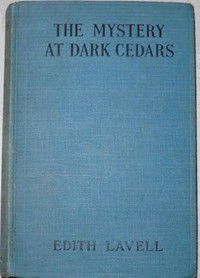
The Mystery at Dark Cedars — A Reader’s Guide
(0 User reviews)
82
Project Gutenberg
2013
Not confirmed
Detective and mystery stories; Teenage girls -- Juvenile fiction; Brigands and robbers -- Juvenile fiction; Women detectives -- Juvenile fiction; Children of police -- Juvenile fiction; Vacation homes -- Juvenile fiction
Readers of public-domain and historical texts
Project Gutenberg digital edition
en
Edition facts
Words
52,313
Reading time
228 min
Text sections
8
The source record for The Mystery at Dark Cedars — A Reader’s Guide measures this digital text at 52,313 words, 3 hr 48 min estimated reading time, and 8 detected text sections.
The text analysis averages about 11.5 words per sentence, while the detected sections provide another way to judge how the source is divided.
Project Gutenberg metadata also associates the work with “Detective and mystery stories,” connecting these edition facts with the source record’s subject description.
Source:
Project Gutenberg record #43582
Edith Lavell's 1935 mystery follows teenage sleuth Mary Louise Gay and her chum Jane Patterson to a remote vacation house where a locked safe, a ghostly figure, and servants' superstitions converge. The narrative moves between domestic scenes and suspenseful nocturnal episodes, using recurring images of darkness, locked rooms, and unexplained footsteps.
Read the complete public-domain text at its original source.
Read on Project GutenbergEdith Lavell's The Mystery at Dark Cedars opens not with a crime but with a kitten trapped in a tree—a small rescue that establishes Mary Louise Gay's resourcefulness and her dog Silky's sensitivity to trouble. The story quickly shifts to the isolated vacation home of the same name, where a locked safe, a missing object, and a servant's belief in a restless spirit create an atmosphere of unease. Lavell builds suspense through contrasts: bright picnic plans versus midnight terrors, the ordinary chatter of teenage girls versus the stealthy creak of a door. The narrative moves between daytime investigations and nighttime confrontations, with recurring images of darkness, locked rooms, and unexplained sounds that keep the mystery grounded in physical details rather than abstract clues.
A House of Locked Doors and Oil Lamps
The setting of Dark Cedars is established through its material limitations: the house uses oil lamps instead of electricity, a detail that becomes crucial when Mary Louise gropes for a flashlight during a nighttime intrusion. The absence of electric light forces characters to rely on flashlights, matches, and the occasional lightning flash, creating a visual pattern of brief, revealing illuminations. The locked safe belonging to the deceased Mrs. Grant is a central object, but Lavell does not describe its contents; instead, she focuses on the servants' reactions to it. Hannah, the cook, insists that the safe holds something valuable that must be returned, and she attributes mysterious disturbances to Mrs. Grant's ghost. This interplay between tangible security (the safe) and intangible fear (the ghost) drives the early tension.
Shifting Between Daytime Normalcy and Nocturnal Suspense
Lavell structures the narrative by alternating between ordinary daytime activities—picnics, ukulele singing, unpacking suitcases—and tense nighttime scenes. The girls' conversation about gypsies and fortune-telling during supper contrasts sharply with the stormy midnight arrival of a white-clad figure. This figure is later revealed to be Elsie, the orphan niece, but the moment of revelation is delayed long enough to sustain fear. The storm itself is used as a narrative device: thunder and rain mask footsteps, and the darkness amplifies every sound. Lavell also uses the servants' departure at eight o'clock to isolate the girls, heightening the vulnerability of the scene. The pattern of building suspense through mundane details—a locked kitchen door, a hot, still night—shows a careful attention to pacing.
Recurring Motifs: Footsteps, Whiteness, and the Supernatural
Several images recur throughout the excerpts. Footsteps are described as “light footsteps, scarcely perceptible above the rain,” emphasizing stealth and ambiguity. The color white appears in the “figure—all in white” that stands in the doorway, linking the supernatural to a specific visual cue. Hannah's belief in a ghostly visitor who “turns things upside down” searching for a lost object introduces a folkloric element that the girls treat seriously. Lavell does not dismiss the supernatural; instead, she lets the characters sit “perfectly still, forgetting even to eat” after Hannah's story. The narrative also uses the dog Silky as an early warning system: his barking at the kitten foreshadows his role in detecting unseen presences. These motifs create a cohesive sensory world where ordinary and uncanny coexist.
Dialect and Character Voice as Clues
Lavell distinguishes characters through their speech patterns. Hannah uses nonstandard grammar (“I never seen nuthin’ valuable,” “Gypsies ain’t no good”) that marks her as a working-class servant with strong opinions. Her dialect contrasts with the polished speech of Mary Louise and Jane, who speak in complete, grammatically correct sentences. This linguistic divide reinforces social hierarchies within the story. Hannah's warnings about gypsies and her insistence on the ghost theory provide the girls with competing explanations for the mystery. The narrative does not privilege any single voice; instead, it presents Hannah's superstition alongside the girls' rational skepticism, leaving the reader to weigh both. The use of dialect also adds period flavor, grounding the dialogue in a specific time and place.
Readers approaching The Mystery at Dark Cedars should pay attention to how Lavell uses physical objects—the safe, the oil lamps, the locked doors—to build suspense without relying on explicit descriptions of the mystery's core. The story's effectiveness lies in its restraint: what is not shown (the safe's contents, the ghost's identity) matters as much as what is revealed. The alternating rhythm of calm and crisis, and the careful placement of sensory details, reward close reading.
Some evenings I think of Mary Louise listening at Dark Cedars for those footsteps over the sea, then I remember another young voyager adrift on the same patient water in Dave Fearless and the Cave of Mystery; or, Adrift on the Pacific — Inside the Classic. Child detectives, both, holding their breath against the unknown—a quiet kinship of lantern-light and locked doors.
There are no reviews for this eBook.
There are no comments for this eBook.
Reader reflection
How did this book work for you?
Your answers remain private and are stored only in this browser.
Your progress
0
/
10
2
Did this book hold your interest?
3
Is this a title you would suggest to others?
4
How easy was the book to follow?
5
Did this book create an emotional response?
6
Which aspect of the book did you value most?
7
Was the book easy to understand?
8
Did the book deliver what you hoped for?
9
Which lesson or insight stayed with you?
10