1

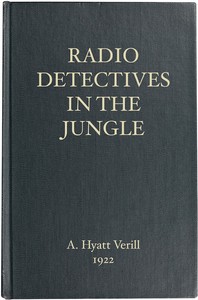
The Radio Detectives in the Jungle — Inside the Classic
(0 User reviews)
73
Project Gutenberg
2013
Not confirmed
Detective and mystery stories; Adventure stories; Radio -- Juvenile fiction; West Indies -- Juvenile fiction; Guyana -- Juvenile fiction
Readers of public-domain and historical texts
Project Gutenberg digital edition
en
Edition facts
Words
53,439
Reading time
233 min
Text sections
5
For The Radio Detectives in the Jungle — Inside the Classic, the stored edition analysis reports 53,439 words, 3 hr 53 min estimated reading time, and 5 detected text sections.
The text analysis averages about 16.4 words per sentence, while the detected sections provide another way to judge how the source is divided.
Project Gutenberg metadata also associates the work with “Detective and mystery stories,” connecting these edition facts with the source record’s subject description.
Source:
Project Gutenberg record #42545
This editorial note examines how A. Hyatt Verrill structures the boys' journey from a hurricane-ravaged West Indies into the Guyanese jungle, using recurring images of damage, repair, and unfamiliar sounds to build suspense and local color.
Read the complete public-domain text at its original source.
Read on Project GutenbergThe story opens with a hurricane's aftermath: a crippled destroyer with two funnels standing, decks swept bare, and railings carried away. This image of damage and repair sets a pattern for the entire narrative. The boys, Tom and Frank, are introduced as seasoned radio detectives, but the text quickly shifts to a new setting—the jungle of Guyana. Verrill uses the destroyer's limping progress as a metaphor for the journey ahead: partial, uncertain, and requiring constant adaptation.
From Wreckage to Wilderness
The transition from sea to jungle is marked by a change in sensory detail. On the destroyer, the focus is on visible damage—missing funnels, encrusted salt, busy bluejackets. Once the party reaches the Essequibo River, the narrative shifts to sound: chirps, whistles, croaks, barks, grunts, and a distant bellow that Tom mistakes for a jaguar. Mr. Thorne corrects him—it is howling monkeys. This moment of misidentification underscores the boys' inexperience and the exoticism of the setting. The author uses the boys' sleepless night, listening to unfamiliar noises, to build atmosphere and to educate both the characters and the reader about the jungle's actual dangers versus imagined ones.
The Role of Local Knowledge
Verrill introduces Colcord, a Boviander guide, whose dialect and confidence contrast with the boys' ignorance. Colcord's speech is rendered phonetically: “I was makin’ a walk up beyon’ Malali for locus’ gum.” He provides crucial information about the missing aircraft, gleaned from an Indian named Charlie. The planning scene at Rockstone is a catalog of logistics: seven men, a boat, ten paddlers, a bowman. The inclusion of Sam, a Bahaman who volunteers to paddle, adds another layer of regional diversity. This section demonstrates how the story's structure depends on gathering local intelligence and assembling a team, a pattern repeated from earlier adventures.
Hammocks and Howlers: The Texture of Jungle Life
The boys' first night in hammocks is described with precise physical detail: wrapping in blankets, lying diagonally, the sensation of sleeping in the open air. Verrill lingers on the chorus of night sounds, identifying each source—insects, frogs, night birds, owls, howling monkeys. The assurance that vampire bats will stay away as long as the lantern burns is a small but vivid touch. This passage serves as a microcosm of the book's method: it alternates between action and observation, using the boys' reactions to anchor the reader's experience. The cold dawn that follows, with Frank shivering and Mr. Thorne promising colder nights ahead, reinforces the idea that the jungle is not a simple tropical paradise.
Movement as Narrative Engine
The chapter titles themselves trace a trajectory: from “Strange Places” to “Off for the Jungle” and “On the Trail.” The story moves by boat, on foot, and by inference—the missing aircraft is always ahead, somewhere up the Essequibo. Verrill uses the journey structure to introduce new characters and obstacles. The destroyer's damage is repaired; the jungle party is assembled; the trail is picked up. Each step requires negotiation with locals, interpretation of signs, and adaptation to the environment. The recurring image of the crippled vessel giving way to a purposeful expedition suggests that the narrative is less about detection than about movement through unfamiliar terrain, with radio as a tool rather than the central focus.
Readers should pay attention to how Verrill balances technical detail—radio equipment, boat logistics, jungle survival—with the boys' subjective experience. The story's structure depends on a series of transitions: from sea to river, from known to unknown, from noise to silence. The excerpts suggest that the real mystery is not the criminals but the landscape itself, and the boys' education in reading it.
I remember how Verrill's boys mended their shattered radio amid jungle static, each repaired wire a small victory against the wild. That quiet persistence reminds me of another traveler, Irma, piecing together unfamiliar customs in Italy. Both journeys are less about arrival than about learning the local silences and sounds. A gentle kinship exists between them. Irma in Italy: A Travel Story — Context and Discussion holds that same patient attentiveness.
There are no reviews for this eBook.
There are no comments for this eBook.
Reader reflection
What did you think of this book?
Answer a few questions and save a private reflection on this device.
Your progress
0
/
10
2
Was reading this book enjoyable?
3
How likely are you to recommend this book?
4
How easy was the book to follow?
5
How original did the book feel?
6
Was the book what you thought it would be?
7
Would you start a conversation about this book?
8
Could you apply anything you learned?
9
What changed or sharpened your thinking?
10