1

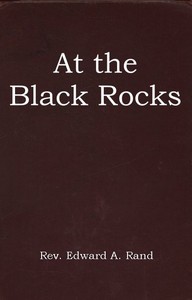
At the Black Rocks — Background and Themes
(0 User reviews)
2214
Project Gutenberg
2012
Not confirmed
Detective and mystery stories; Conduct of life -- Juvenile fiction; Boys -- Conduct of life -- Juvenile fiction; Friendship -- Juvenile fiction; Sailing -- Juvenile fiction; Ship captains -- Juvenile fiction; Christmas -- Juvenile fiction; Storms -- Juvenile fiction; Intergenerational relations -- Juvenile fiction
Readers of public-domain and historical texts
Project Gutenberg digital edition
en
Edition facts
Words
47,464
Reading time
207 min
Text sections
7
For At the Black Rocks — Background and Themes, the stored edition analysis reports 47,464 words, 3 hr 27 min estimated reading time, and 7 detected text sections.
The text analysis averages about 13.3 words per sentence, while the detected sections provide another way to judge how the source is divided.
Project Gutenberg metadata also associates the work with “Detective and mystery stories,” connecting these edition facts with the source record’s subject description.
Source:
Project Gutenberg record #40269
Edward A. Rand's 1870s boys' adventure follows Bartie Trafton and Dave Fletcher through storms, lighthouse life, and moral choices. The narrative shifts between Bartie's clumsy earnestness and Dave's quiet resilience, with a deliberate pace that lingers on inner thoughts and coastal atmosphere.
Read the complete public-domain text at its original source.
Read on Project GutenbergThe novel opens with a scene of domestic negotiation: Bartie Trafton, a small boy with a squint and a history of mishaps, volunteers to row for a doctor while his grandparents debate his chances. The dialogue is clipped and weighted with doubt—"I might try," squeaks Bartie; his grandmother says "Ye-s-s" with hesitation. The prose mirrors the boy's own uncertainty, lingering on the rising wind and the wrinkled water. This is not a story that rushes into action; it takes time to establish character through gesture and setting.
Two Boys, Two Voices
The narrative voice shifts markedly between the two central boys. Bartie Trafton is introduced through external observation: his "unfortunate twist" of the eyes, his reputation for catching measles, the community's low expectations. The prose is brisk and slightly ironic—"It is a wonder that Bartie ever came back at all." Dave Fletcher, by contrast, is filtered through the lighthouse keeper's interior monologue. Toby Tolman muses on Dave's "quiet manners" and "grit," noting that "he had rather find out a thing himself than be told." The language becomes meditative, full of speculation and indirect characterization. Where Bartie's sections move with the choppy rhythm of a small boat, Dave's unfold like the keeper's own patient thoughts.
The Lighthouse as a Stage for Stillness
The lighthouse setting imposes a distinctive pace. A long passage describes a calm day: "the tower was very quiet," the fog-signal machinery still, the breeze playing around the trumpets without response. This stillness is not empty—it is charged with the keeper's internal "ocean tempest" as he wrestles with how to influence Dave. The prose slows to match the environment, then accelerates when a voice is heard outside. Rand uses the contrast between calm and storm not just as plot device but as a structural rhythm. The reader is made to feel the weight of quiet moments before the action breaks.
Silence as a Narrative Tool
Dave's silence is a recurring motif that shapes the storytelling. His mother says "Dave is fullest when he seems to be emptiest," and the keeper admits "I don't think I understand that boy yet." The narrator does not give Dave's thoughts directly; instead, we see him through others' interpretations. This restraint creates a sense of interior depth without explicit access. When Dave is described as "a silent lad over important subjects," the narrative itself adopts that reticence. The reader must infer his feelings from his stillness, his long seasons of silence, and the keeper's open Bible left on the table. The technique mirrors the book's broader interest in what is left unsaid.
The Storm's Arrival and Shift in Tempo
The final excerpted section marks a clear change in pace. The keeper's morning prediction—"Beautiful day! ... but it won't"—foreshadows a storm. The prose tightens: "How the sea might rock and roar in twenty-four hours!" Sentences become shorter, more urgent. The lighthouse's peaceful routine is replaced by "hurrying feet" and the fog-signal's "sharp, piercing warning." This is where the novel's earlier patience pays off: the reader has learned the rhythms of the lighthouse, so the disruption feels tangible. The storm is not just weather; it is a narrative gear shift, accelerating the story toward the crisis implied by the chapter titles "The Storm Gathering" and "The Storm Striking."
Readers attentive to voice will notice how Rand varies sentence length and interior focus between characters. Bartie's sections are brisk and external; Dave's are filtered through the keeper's quiet speculation. The lighthouse itself becomes a character that dictates tempo—calm days allow for moral reflection, while storms drive action. Pay attention to what the narrator chooses not to say, especially about Dave: the gaps are deliberate.
Reading Rand’s quiet storms and Bartie’s slow growth, I found myself thinking of a smaller, softer world—where bees and butterflies carry their own little dramas. There’s the same patience, the same watching of character unfold in tiny actions. That gentleness stayed with me, like a warm corner of memory. The Perambulations of a Bee and a Butterfly, In which are delineated those smaller traits of character which escape the observation of larger spectators. — Inside the Classic feels like its echo, unhurried and kind.
There are no reviews for this eBook.
There are no comments for this eBook.
Reader reflection
How did this book work for you?
Your answers remain private and are stored only in this browser.
Your progress
0
/
10
2
Did this book hold your interest?
3
Is this a title you would suggest to others?
4
Did the language feel accessible?
5
Did any part of the book stay with you emotionally?
6
Did the story or argument move comfortably?
7
What was the strongest part of the book?
8
Did it raise ideas you would like to talk about?
9
What is the main idea you are taking away?
10