1

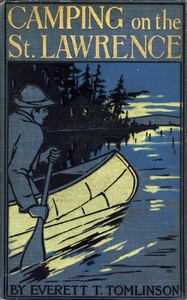
Camping on the St. Lawrence; Or, On the Trail of the Early Discoverers — Edition Insights
(0 User reviews)
1235
Project Gutenberg
2013
Not confirmed
Conduct of life -- Juvenile fiction; Fishing -- Juvenile fiction; Canoes and canoeing -- Juvenile fiction; Friendship -- Juvenile fiction; Camping -- Juvenile fiction; Kindness -- Juvenile fiction; Youth -- Conduct of life -- Juvenile fiction; Outdoor life -- Juvenile fiction; Explorers -- Juvenile fiction
Readers of public-domain and historical texts
Project Gutenberg digital edition
en
Edition facts
Words
84,309
Reading time
367 min
Text sections
9
This digital edition of Camping on the St. Lawrence; Or, On the Trail of the Early Discoverers — Edition Insights is described by source-level measurements including 84,309 words, 6 hr 7 min estimated reading time, and 9 detected text sections.
The text analysis averages about 17.4 words per sentence, while the detected sections provide another way to judge how the source is divided.
Project Gutenberg metadata also associates the work with “Conduct of life -- Juvenile fiction,” connecting these edition facts with the source record’s subject description.
Source:
Project Gutenberg record #42623
In this 1905 boys' adventure, four friends camp along the St. Lawrence River, blending fishing, canoeing, and mock Indian war-whoops with historical tales of early explorers. Bob's pranks and the boatman Ethan's laconic commentary create a contrast between frontier play and genuine river lore.
Read the complete public-domain text at its original source.
Read on Project GutenbergThe story opens with four boys—Ben, Jock, Bert, and Bob—preparing for a camping trip on the St. Lawrence River, guided by the experienced boatman Ethan. From the start, the narrative balances earnest outdoor instruction with the kind of mischief that defines Bob's character. In one excerpt, Bob volunteers for guard duty, then stages a theatrical performance: he fires a revolver, shrieks “Hi! Yi! Yi!” and dances before the tent, claiming he is scaring off “prowling panthers.” His comrades are exasperated, but Bob’s antics are tolerated as part of the group’s dynamic.
The author, Everett T. Tomlinson, frames the journey as both a physical adventure and an encounter with history. The preface states his aim to make readers “feel something of the power of the wonderful history of those who first looked upon its scenes of beauty.” This dual focus—on present-day camping and past exploration—shapes the book’s structure, alternating between practical river lore and stories of early discoverers.
Bob’s Nocturnal Performance and Group Dynamics
Bob’s guard-duty episode is a set piece that reveals the group’s social order. He deliberately wakes his friends with “unearthly cries” and revolver shots, then feigns innocence when confronted. The dialogue is crisp: Ben’s sarcastic “Oh, no, you didn’t disturb us” and Bob’s drawled “It’s fearfully lonesome out here” show how the boys negotiate authority and irritation. Bob’s prank is not merely disruptive; it is a calculated performance. He hides his blanket and pillow behind a tree before beginning, ensuring his own comfort. The episode also highlights the boatman Ethan’s role as an outsider who observes the boys’ behavior with dry surprise: “What ye sleepin’ out here for?” he asks, and Bob responds by repeating the war dance. The scene suggests that the camp’s real tension is not between the boys and nature, but among the boys themselves, with Bob as the instigator and the others as reluctant audience.
Historical References and the River as Classroom
Tomlinson explicitly connects the camping trip to the legacy of explorers. The preface mentions “the men who first sailed over its waters” and their “heroism, persistence, and consecration.” The chapter titles reinforce this: “Ancient History,” “Ethan tells of the ‘Jumpers,’” and “On the Trail of the Early Discoverers.” The river itself becomes a teaching tool. In the excerpts, Ethan’s voice provides local knowledge, while the boys’ adventures—fishing, canoeing, shooting rapids—mirror the challenges faced by earlier navigators. The author’s note that “young people are able to feel the inspiration of nature’s power when they are not able to define or express it” suggests that the historical lessons are meant to be absorbed indirectly, through experience rather than lecture. The book thus operates on two levels: a surface story of camping mishaps and a deeper current of historical consciousness.
Contrasts Between Play and Practical Skill
The excerpts reveal a persistent contrast between the boys’ playful approach and the demands of river life. Bob’s mock-heroic guard duty is a parody of vigilance; he sleeps between his “war dances” and admits he was “afraid I might” see something. Meanwhile, Ethan’s competence is implied by his role as guide. The catalog subjects—fishing, canoeing, camping—are treated with enough detail to suggest that the author valued accuracy. The chapter “Ben tries the Canoe” and “The First Day’s Sport” indicate that skill development is part of the plot. Yet the humor undercuts any solemnity. Bob’s antics, such as hiding his bedding before his performance, show a character who treats the wilderness as a stage. This tension between genuine outdoor education and theatrical play gives the book its distinctive tone: it is neither a pure survival manual nor a mere farce, but a hybrid where practical lessons emerge through comic disorder.
Readers interested in the interplay between historical adventure and boys’ own mischief will find this book a curious blend. The St. Lawrence setting is more than a backdrop; it is a character in its own right, shaping both the dangers and the lessons. Pay attention to how Tomlinson uses Ethan’s laconic remarks and Bob’s theatricality to keep the narrative from becoming too earnest. The result is a story that respects its young audience’s capacity for both wonder and laughter.
There’s something about those boys on the St. Lawrence, half-playing at history while the river keeps its own quiet counsel, that lingers. I find myself thinking of that same hush in The Mystery at Dark Cedars — A Reader’s Guide, where the woods hold more than the eye first sees. It’s a gentler sort of remembering, that’s all.
There are no reviews for this eBook.
There are no comments for this eBook.
Reader reflection
What did you think of this book?
Answer a few questions and save a private reflection on this device.
Your progress
0
/
10
2
What was your overall reaction to the book?
3
Would you recommend this book to another reader?
4
How much effort did this book require?
5
How understandable was the text?
6
What did you appreciate most?
7
How did the reading compare with what you expected?
8
Could you apply anything you learned?
9
What changed or sharpened your thinking?
10