1

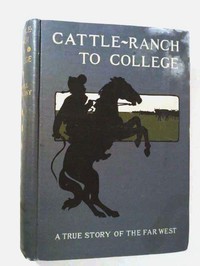
Cattle-Ranch to College: The True Tales of a Boy's Adventures in the Far West — Reading Notes
(0 User reviews)
1677
Project Gutenberg
2012
Not confirmed
Conduct of life -- Juvenile fiction; Indians of North America -- Juvenile fiction; Youth -- Conduct of life -- Juvenile fiction; Outdoor life -- Juvenile fiction; Hunting -- Juvenile fiction; Parent and child -- Juvenile fiction; Cowboys -- Juvenile fiction; Cattle -- Juvenile fiction
Readers of public-domain and historical texts
Project Gutenberg digital edition
en
Edition facts
Words
76,891
Reading time
335 min
Text sections
10
For Cattle-Ranch to College: The True Tales of a Boy's Adventures in the Far West — Reading Notes, the stored edition analysis reports 76,891 words, 5 hr 35 min estimated reading time, and 10 detected text sections.
The text analysis averages about 19.3 words per sentence, while the detected sections provide another way to judge how the source is divided.
Project Gutenberg metadata also associates the work with “Conduct of life -- Juvenile fiction,” connecting these edition facts with the source record’s subject description.
Source:
Project Gutenberg record #39850
This editorial note examines the structure and recurring imagery in Russell Doubleday's account of a boy's transition from frontier ranch life to Eastern college, focusing on movement between scenes and the emotional weight of leaving home.
Read the complete public-domain text at its original source.
Read on Project GutenbergRussell Doubleday's Cattle-Ranch to College opens with an Indian attack and closes with a twelve-hundred-mile bicycle journey to college, but the book's real structure is built on a series of departures. The narrative moves from one scene of leaving to another: John Worth leaves his family's camp after a humiliating beating, leaves his brother Ben at dawn, and later leaves the ranch for the wider world. Each departure is marked by a specific, emotionally charged moment—a handshake, a turned face, a cry hidden from view—that gives the episodic adventures a unifying emotional arc.
The Recurring Motif of the Dawn Departure
The most striking structural pattern in the excerpts is the repeated dawn departure. When John leaves home, the narrative notes: "Day was just breaking; the stars still shone above, while the sun's mellow light brightened the east." The same time of day recurs when he sets out for Helena, and again when he begins his bicycle journey to college. This is not merely a practical detail; the dawn becomes a symbol of new beginnings and the emotional cost of leaving. The author emphasizes that "neither boy had any eyes for the beauties of the sunrise"—the natural world is present but unappreciated, underscoring the internal focus on separation.
The Emotional Weight of the Brother Bond
The relationship between John and Ben is the emotional core of the early chapters. The text describes them as "not only brothers but 'pardners,'" sharing a shoe-box cradle, toys, dangers, and even a blanket. When John leaves, the narrative states: "Brothers still they would be, but 'pardners' never again." This precise phrasing marks a permanent shift. Ben's grief is portrayed as heavier because he stays behind with "duty, weary, commonplace, devoid of companionship and boyish sympathy." The contrast between John's freedom and Ben's stasis is drawn without sentimentality, using concrete details like Ben's freckled face and pleading voice.
Movement Between Wilderness and Civilization
The book's structure alternates between two poles: the open frontier and the settled world. Early chapters describe Indian attacks, buffalo hunts, and mining camps; later chapters shift to herding horses, range-riding, and finally college. The transition is not abrupt but gradual, marked by changes in landscape and activity. The preface frames this as a historical shift: "the 'wild and woolly' West is fast vanishing." The narrative itself enacts this vanishing, moving from encounters with Indians to the discipline of university life. The bicycle journey—twelve hundred miles—physically bridges the two worlds, a detail that underscores the theme of movement as transformation.
Recurring Images of Shame and Resilience
A specific image recurs: John hiding his face after a beating, with "eyes blacked, face scratched, mouth swollen." His father's jeering response—"You're a sight"—triggers the decision to leave. Later, when parting from Ben, both boys "turned their faces away, ashamed of the tears." The face, whether swollen or averted, becomes a recurring emblem of vulnerability and pride. John's shouted refrain "I don't care" is repeated to convince himself, revealing the gap between bravado and feeling. These small, precise details—a black eye, a turned head, a repeated phrase—anchor the emotional realism in an otherwise adventurous narrative.
Readers will find that the book's episodic structure rewards attention to the moments between adventures—the quiet departures, the unspoken grief, the repeated gestures. The narrative does not simply recount exploits; it traces a boy learning to leave, again and again, until leaving becomes a way of life. Pay particular attention to the scenes at dawn and the interactions between John and Ben; they provide the emotional continuity that binds the far-flung episodes into a coherent coming-of-age story.
There’s something about how that cattle-ranch boy keeps moving, each scene parting like grass, and I kept thinking of the quiet way Master Meadow Mouse slips through his own small world. Both feel like leaving places you didn’t know you loved until you’re already gone. The Tale of Master Meadow Mouse — Background and Themes stayed with me that same tender way.
There are no reviews for this eBook.
There are no comments for this eBook.
Reader reflection
How will you remember this book?
Save your reaction, strongest insight, and memorable passage.
Your progress
0
/
10
2
Was reading this book enjoyable?
3
Would you encourage someone else to read it?
4
Did the language feel accessible?
5
Did this book create an emotional response?
6
What did you think about the pace?
7
How closely did the book connect with your experience?
8
Was the book what you thought it would be?
9
What did this book teach you most?
10