1

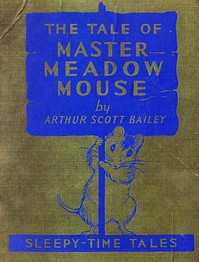
The Tale of Master Meadow Mouse — Background and Themes
(0 User reviews)
69
Project Gutenberg
2008
Not confirmed
Animals -- Juvenile fiction; Friendship -- Juvenile fiction; Picture books for children; Mice -- Juvenile fiction; Escapes -- Juvenile fiction
Readers of public-domain and historical texts
Project Gutenberg digital edition
en
Edition facts
Words
16,840
Reading time
74 min
Text sections
3
This digital edition of The Tale of Master Meadow Mouse — Background and Themes is described by source-level measurements including 16,840 words, 1 hr 14 min estimated reading time, and 3 detected text sections.
The text analysis averages about 12.8 words per sentence, while the detected sections provide another way to judge how the source is divided.
Project Gutenberg metadata also associates the work with “Animals -- Juvenile fiction,” connecting these edition facts with the source record’s subject description.
Source:
Project Gutenberg record #24872
This editorial note examines Arthur Scott Bailey's word choices in The Tale of Master Meadow Mouse, focusing on how diction, dialogue, and description shape the protagonist's character and the story's tone. Observations are drawn from the provided excerpts only.
Read the complete public-domain text at its original source.
Read on Project GutenbergArthur Scott Bailey introduces Master Meadow Mouse with a series of short, clipped phrases: "His legs were so short and his tail was so short and his ears were so short." The repetition of "so short" emphasizes the mouse's pudgy build while establishing a rhythmic, almost singsong voice. Bailey then contrasts how friendly and unfriendly characters regard the mouse: friends smile when speaking of him, while enemies "grinned horribly and licked their lips." This direct juxtaposition of reactions—one based on good nature, the other on appetite—immediately signals the central tension of the story: a small, good-natured creature navigating a world full of predators.
Repetition and Rhythm in Description
Bailey's descriptive style relies heavily on repetition to create a memorable, almost folkloric cadence. In the opening paragraph, the word "short" appears four times in quick succession, reinforcing the mouse's physical traits. Later, when Master Meadow Mouse loses his temper over the mowing, Bailey writes that "he agreed with Bobby Bobolink's wife" and then quotes her directly. The narrator's interjection—"It was no wonder that he agreed"—uses understatement to humorous effect. Bailey also repeats the phrase "Master Meadow Mouse" frequently, which not only maintains formality but also underscores the character's titular status, even as he faces constant peril.
Dialogue as Character Revelation
Dialogue in the excerpts reveals personality through word choice and tone. When Long Bill Wren warns about the flood, Master Meadow Mouse responds with a laugh: "The fall rains won't trouble me. If the creek rises as high as my house it will be all the more fun." The use of "fun" and the dismissive tone show a carefree, even reckless optimism. In contrast, Long Bill Wren's speech is cautious and practical: "You want to avoid that." The wren's directness and the mouse's blithe confidence are established through contrasting diction. Similarly, when the mouse's cousin shouts "Don't jump! I'll rescue you," the urgency contrasts with the mouse's calm reply: "I don't want to be rescued." These exchanges build character without explicit narration.
Narrative Voice and Understated Humor
Bailey's narrator often inserts dry, understated observations that add humor. For instance, after listing the many enemies that watch for Master Meadow Mouse, the narrator notes: "Naturally, he soon learned to be on the lookout for them. And if he hadn't seen them first he would never have grown up to be Mister Meadow Mouse." The casual shift from "Master" to "Mister" implies survival as a rite of passage. Another example: when the flood carries the mouse's house away, he "held his fat sides and roared." The image of a tiny mouse roaring with laughter at his own disaster is both absurd and endearing. Bailey's narrator maintains a light, almost parental tone, never dwelling on danger but acknowledging it with wry asides.
Setting and Sensory Details
The setting is evoked through specific, concrete details rather than broad description. The meadow is defined by its dangers: "the high grass" that hides the mouse, the "naked stubble" after mowing, and the "thick white blanket" of snow under which he tunnels. Bailey uses sensory language sparingly but effectively. When the flood comes, the reader sees "a floating board" and hears the mouse's "Hurrah!" as he scrambles onto it. The creek is described as "swollen," and the board carries him "along with the current." These details ground the adventure in a tangible world. The mention of specific locations—Farmer Green's meadow, Black Creek, Cedar Swamp—gives the story a coherent geography, even if the excerpts do not reveal the full extent of the mouse's travels.
Readers attentive to Bailey's craft will notice how he balances peril with playfulness through precise word choices. The mouse's repeated use of "fun" and laughter in the face of danger is not naive but a deliberate characterization. The narrator's dry asides and the rhythmic repetition of physical traits create a tone that is both gentle and wry. These authorial choices invite readers to enjoy the adventure without losing sight of the stakes, making the story suitable for young audiences while rewarding closer attention to language.
Reading about Master Meadow Mouse’s careful, small words reminded me of how I once lingered over a quiet winter scene in Wild Adventures round the Pole Or, The Cruise of the "Snowbird" Crew in the "Arrandoon" — Reading Notes, where the stillness felt almost holy. Both books share that gentle patience—letting a character’s simplest choice carry the whole mood, without hurry.
There are no reviews for this eBook.
There are no comments for this eBook.
Reader reflection
What was your reading experience?
Capture what you thought, learned, and would like to remember.
Your progress
0
/
10
2
How much did you enjoy the reading experience?
3
Is this a title you would suggest to others?
4
How easy was the book to follow?
5
Did the book deliver what you hoped for?
6
Did the book give you something worth debating?
7
Would a second reading be valuable?
8
How would you rate its originality?
9
What did this book teach you most?
10