1

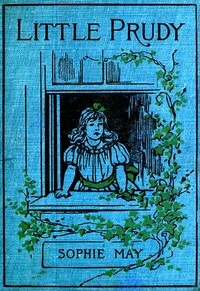
Little Prudy — Story, Setting & Ideas
(0 User reviews)
335
Project Gutenberg
2008
Not confirmed
Christian life -- Juvenile fiction; Children -- Conduct of life -- Juvenile fiction; Family -- Juvenile fiction; Girls -- Juvenile fiction; Maine -- Juvenile fiction
Readers of public-domain and historical texts
Project Gutenberg digital edition
en
Edition facts
Words
27,536
Reading time
120 min
Text sections
4
The catalog record for Little Prudy — Story, Setting & Ideas provides practical reading context through 27,536 words, 2 hr estimated reading time, and 4 detected text sections.
The text analysis averages about 14.9 words per sentence, while the detected sections provide another way to judge how the source is divided.
Project Gutenberg metadata also associates the work with “Christian life -- Juvenile fiction,” connecting these edition facts with the source record’s subject description.
Source:
Project Gutenberg record #24711
Sophie May's 1891 children's story follows three-year-old Prudy Parlin in Portland, Maine, as her impulsive chatter and earnest attempts to help lead to comic mishaps. The narrative contrasts Prudy's literal-mindedness with her older sister Susy's caution, and adult figures vary in patience. Excerpts show Prudy's patchwork struggles, a garbled Cinderella retelling, and a day trip with a nervous aunt.
Read the complete public-domain text at its original source.
Read on Project GutenbergFrom the first chapter, Sophie May establishes Prudy Parlin as a child who “was always saying and doing funny things, and very often getting into trouble.” At three years old, Prudy insists on having patchwork like her sister Susy, but the task quickly frustrates her: she breaks needles, pricks her fingers, and runs to her mother with every stitch. The narrator reports her crying and wishing “there were no such thing as patchwork.” This pattern of eager imitation followed by comic failure recurs throughout the excerpts.
May’s dialogue captures Prudy’s distinctive voice—a mix of earnestness and scrambled logic. When her baby sister appears, Prudy drops her sewing to hug her, exclaiming, “I wouldn’t have a horse come and eat you up for any thing in the world!” The line reveals both her affection and her tendency to imagine improbable dangers.
Patchwork and Persistence
Prudy’s patchwork episode is the first sustained example of how May uses a simple domestic task to expose her protagonist’s temperament. Mrs. Parlin gives Prudy “a few calico pieces, just to keep her little fingers out of mischief,” but the child’s ambition outstrips her skill. She cannot sew without constant validation: “She kept running to her mother with every stitch, saying, ‘Will that do?’” When her mother refuses to be interrupted, Prudy sits near the door and sews “with all her might”—only to abandon the needle the moment a distraction appears.
The scene establishes a tension between Prudy’s desire to be grown-up and her inability to sustain focus. May does not moralize directly; instead, she lets the humor arise from the gap between intention and action. Later chapters revisit this dynamic: Prudy tries to help, to tell stories, to behave, but her impulses repeatedly override her resolutions. The patchwork is never finished in the excerpts, leaving the reader to wonder whether she will ever complete a stint.
A Child’s Cinderella
In chapter ten, Prudy and Susy take turns telling stories. Prudy’s version of Cinderella is a masterpiece of misremembered details. She begins confidently: “Once there was goin’ to be three balls, and Cindrilla didn’t have no mother, and her father didn’t have no wife, so he married him one.” The fairy godmother becomes a grandmother; the pumpkin turns into “a gold hack”; the rat-trap produces “two footmens”; and the horses are “some bugs round there.” Prudy’s narrative logic collapses time and causality, yet she insists on a happy ending: “they’re all safe now.”
When aunt Madge asks what “all safe” means, Prudy explains that Cinderella “will have a good father and a good mother, and won’t sit in the coal-hod no more.” The answer reveals that Prudy understands the story’s emotional core—rescue from mistreatment—even as she garbles the plot. Susy, meanwhile, complains that Prudy’s chatter “drove it all out of my head,” highlighting the contrast between the sisters: Susy wants to tell a planned fairy story, while Prudy improvises freely.
Adult Patience and Its Limits
The adults in Little Prudy respond to the children with varying degrees of tolerance. Aunt Madge is consistently gentle, calling the children “blessed” and laughing at their antics. Aunt Louise, barely fifteen herself, is more easily exasperated. When Prudy hesitates to fetch a parasol, aunt Louise says, “I see Prudy isn’t going to mind me,” prompting Prudy to retort, “Well, don’t you see me getting up out of my chair?” The exchange captures a power struggle: the adult demands immediate obedience, while the child insists on being acknowledged for her eventual compliance.
Aunt Louise’s worry is comic but pointed: she fears the children will “get drowned, or run over, or break their necks.” Her anxiety contrasts with aunt Madge’s confidence that “there is nothing so very wicked about our little nieces.” Prudy herself declares, “I know who I love best of any body in this house, and it ain’t the one that’s got her bonnet on”—spelling out “aunt Madge” letter by letter. The preference is clear, and May uses it to show how children gravitate toward adults who trust them.
Readers approaching Little Prudy should attend to the rhythm of the dialogue, which carries much of the characterization. Prudy’s speech is full of dashes, repetitions, and sudden leaps of logic; Susy’s is more measured. The adults’ voices also vary: aunt Madge laughs easily, while aunt Louise sighs and warns. These vocal contrasts create a social world in which children test boundaries and adults react along a spectrum from patience to exasperation. The excerpts offer no complete arc, but they establish a pattern of small domestic crises that will likely recur throughout the book.
That rainy afternoon, Little Prudy felt like listening to a child’s scattered thoughts—her earnest tangles, the gentle chaos of small mistakes. Afterwards I lingered on a shelf, remembering how an impulsive trip can upend everything quietly. My hand found Nan Sherwood at Palm Beach; or, Strange adventures among the orange groves — Key Ideas to Explore, and the rain kept falling, the pages turning on their own.
There are no reviews for this eBook.
There are no comments for this eBook.
Reader reflection
Before you leave, reflect on the book
Use these questions to collect your thoughts before moving on.
Your progress
0
/
10
2
Did this book hold your interest?
3
Would you encourage someone else to read it?
4
What was the reading difficulty like?
5
How personally connected did you feel to the book?
6
How valuable was this book for your own interests?
7
Did anything about the book feel genuinely new?
8
Which element worked best for you?
9
What is the main idea you are taking away?
10