1


Dorothy's Travels — Themes and Context
(0 User reviews)
482
Project Gutenberg
2008
Not confirmed
Girls -- Juvenile fiction; Boats and boating -- Juvenile fiction; Foundlings -- Juvenile fiction; Travel -- Juvenile fiction; Ocean travel -- Juvenile fiction; Musicians -- Juvenile fiction; Young women -- Social life and customs -- Juvenile fiction; Chester, Dorothy (Fictitious character) -- Juvenile fiction
Readers of public-domain and historical texts
Project Gutenberg digital edition
en
Edition facts
Words
66,180
Reading time
288 min
Text sections
7
For Dorothy's Travels — Themes and Context, the stored edition analysis reports 66,180 words, 4 hr 48 min estimated reading time, and 7 detected text sections.
The text analysis averages about 17.1 words per sentence, while the detected sections provide another way to judge how the source is divided.
Project Gutenberg metadata also associates the work with “Girls -- Juvenile fiction,” connecting these edition facts with the source record’s subject description.
Source:
Project Gutenberg record #25630
Raymond's diction in Dorothy's Travels blends colloquial mountain speech with formal narration, while dialogue reveals character through dialect and abrupt shifts. The journey down the Hudson and through Nova Scotia is rendered in vivid, sensory details—from a steamer's whistle to an ox-cart's straw seats—that ground the adventure in specific, observed moments.
Read the complete public-domain text at its original source.
Read on Project GutenbergFrom the opening shout of the colored steward—"All aboard—what's goin'! All ashore—what ain't!"—Raymond establishes a world where dialect and action collide. Dorothy's travels begin not with a grand departure but with a near-miss: she "fairly pushed Alfaretta" toward the gangplank, only to have the mountain girl pull out a "shabby purse" and declare she'll stay aboard. The narrator lets the scene unfold through quick, physical gestures—handkerchiefs waving, a workman flinging Monty by his coat collar—rather than exposition.
Raymond's prose favors concrete nouns and active verbs. The steamer's whistle "tooted," the gangplank is drawn back, and the widening water separates friends. These details anchor the reader in the moment, while the dialogue carries the emotional weight: Alfaretta's "grief more than grammar" speech—"I don't see why some folks has everything and some hasn't nothin'!"—hints at class tensions that will surface again.
Dialect as Character Marker
Raymond uses dialect not as decoration but as a tool for characterization. Alfaretta's mountain speech—"Easy as preachin'"—contrasts with Dorothy's more standard English, marking their different backgrounds. The teamster Snackenberg's greeting to Melvin—"Son of all the Cooks!"—is both familiar and regional, while his commands to his oxen—"Gee, there! Haw, I tell ye!"—ground him in his work. Even minor characters are given distinctive voices: the steward's stentorian shout, Molly's Irish-cism ("If I hadn't been in front I'd have been behind!"), and Melvin's sudden burst of courage when he hails Snackenberg. These speech patterns are consistent and reveal social standing, origin, and temperament without authorial comment.
Notably, Raymond does not italicize or apologize for dialect; she presents it as natural. The narrator's own voice remains neutral, letting the characters' words carry the flavor. This technique allows readers to infer relationships and tensions—such as the class divide between the wealthy party and the working teamster—without explicit explanation.
The Rhythm of Departure and Arrival
Raymond structures travel as a series of abrupt transitions. The first chapter ends with Dorothy "fairly pushed" aboard, and the journey proceeds in fits and starts: a race to catch the boat, a sudden decision to stay, a hasty goodbye. Later, in Nova Scotia, the party splits without warning—Dorothy and Melvin climb into an ox-cart while the others walk ahead. The narrator notes that "the truants had been suddenly missed" and that Molly is "more vexed than anxious."
These moments of separation are rendered in sensory detail: the "little chasm of water" Jim leaps across, the "bundle of clean straw" that serves as a seat, the teamster's boast about his "purtier pair of creeturs." Raymond lingers on the physical sensations of travel—the jolt of the cart, the sound of the whistle—while the emotional reactions are implied through action rather than introspection. This technique keeps the narrative pace brisk and the reader focused on the immediate experience.
Setting as Active Participant
Raymond does not describe settings in static paragraphs; she embeds them in action. The Hudson River appears through the gangplank being drawn back, the widening water, and the group on shore growing indistinct. The Nova Scotian landscape emerges as Melvin points out familiar scenes to Dorothy, and the teamster's cart climbs "to the very crest of the hill behind the town." The ox-cart itself is described functionally—"swung low to the ground, after the fashion of Nova Scotian carts"—but its straw seats and the teamster's pride in his animals make it vivid.
Even the weather is woven into the narrative: "moonlight and mist on the sea" is a chapter title that promises atmosphere, and the text likely delivers it through sensory details. Raymond's settings are never mere backdrops; they are encountered through the characters' movements and reactions. Dorothy's delight in "everything he pointed out" makes the scenery come alive for the reader as well.
The Unspoken Tensions of Class and Gender
Raymond's dialogue and description hint at social dynamics without stating them outright. Alfaretta's complaint—"some folks has everything and some hasn't nothin'!"—is a rare direct statement of class resentment. More often, the tensions are embedded in action: the wealthy party walks ahead while Dorothy and Melvin ride in a working cart; Molly's frustration at being "shut out" from their fun suggests a hierarchy among the young people. Melvin's "abnormal shyness" around the group but ease with Snackenberg implies discomfort with his own social position.
Gender roles are similarly subtle. Dorothy is described as "just another boy, for any 'nonsense' there was about her," a compliment that reveals period expectations. Yet she is also the one who must "take Melvin under your shelter" and make him talk, a nurturing role. The narrator does not comment on these contradictions, leaving readers to observe how Dorothy navigates between independence and expected femininity.
Raymond's authorial choices reward attention to small moments: a dialect phrase, a gesture, a detail of conveyance. Readers will find that the journey's meaning emerges not from grand events but from the accumulation of such particulars. The excerpts suggest a work that values observation over explanation, letting characters and settings speak for themselves. Approach the text as a series of vivid scenes rather than a plotted arc, and notice how Raymond's diction—colloquial, precise, and unadorned—shapes every encounter.
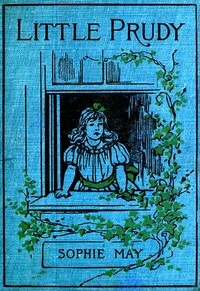
Sometimes when I close Dorothy's Travels, I think of the quieter hours in Little Prudy — Story, Setting & Ideas, where childhood's small worries echo less loudly. Both books share that tender hush of a journey—one by river, one by heart—and I find myself lingering over their shared warmth, as if remembering old friends who never truly left the shelf.
There are no reviews for this eBook.
There are no comments for this eBook.
Reader reflection
Take a moment to reflect on this book
Create a short personal record of your experience with this book.
Your progress
0
/
10
2
What was your overall reaction to the book?
3
How likely are you to recommend this book?
4
Did the language feel accessible?
5
Did anything about the book feel genuinely new?
6
Is this a title worth rereading?
7
How understandable was the text?
8
How would you describe its reading pace?
9
What is the main idea you are taking away?
10