1

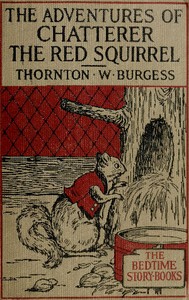
The Adventures of Chatterer the Red Squirrel — A Closer Reading
(0 User reviews)
2017
Project Gutenberg
2011
Not confirmed
Animals -- Juvenile fiction; Conduct of life -- Juvenile fiction; Friendship -- Juvenile fiction; Squirrels -- Juvenile fiction; Cowardice -- Juvenile fiction; Trust -- Juvenile fiction
Readers of public-domain and historical texts
Project Gutenberg digital edition
en
Edition facts
Words
19,787
Reading time
87 min
Text sections
3
The source record for The Adventures of Chatterer the Red Squirrel — A Closer Reading measures this digital text at 19,787 words, 1 hr 27 min estimated reading time, and 3 detected text sections.
The text analysis averages about 16.1 words per sentence, while the detected sections provide another way to judge how the source is divided.
Project Gutenberg metadata also associates the work with “Animals -- Juvenile fiction,” connecting these edition facts with the source record’s subject description.
Source:
Project Gutenberg record #37952
An editorial note on Thornton W. Burgess's story of a red squirrel's capture and taming, focusing on shifts in narrative pace and the internal voice that drives Chatterer's choices.
Read the complete public-domain text at its original source.
Read on Project GutenbergFrom the opening chapter, Burgess establishes a rapid, breathless tempo as Chatterer flees for his life. The prose mirrors the squirrel's panic: short declarative sentences, repeated warnings, and a constant sense of motion. Yet once Chatterer is trapped in Farmer Brown's boy's cage, the pace slows dramatically. The narrative lingers on his despair, his empty stomach, and the small sounds inside the prison. This shift from flight to stillness is not merely a plot device—it becomes the story's central tension, forcing the reader to attend to Chatterer's internal struggle rather than external action.
The Small Voice and the Stomach
Burgess gives Chatterer a persistent internal voice that grows louder as his situation worsens. In the prison scene, this voice is personified: his stomach whispers and tells him so, arguing against his resolve to starve. The dialogue between Chatterer's pride and his hunger is rendered with comic precision—he picks up a hickory nut, puts it down, picks it up again, each time finding it harder to resist. The narrator never moralizes; instead, the physical need simply overcomes the dramatic vow. This technique recurs throughout the excerpts: the small voice that earlier shouted “I am afraid” (frontispiece caption) now becomes the voice of appetite. Burgess uses this internal conflict to advance character without authorial commentary.
Pace as a Mirror of Captivity
The pacing of the prose changes markedly when Chatterer is caged. Early chapters are crowded with action verbs—ran, dodged, leaped—and short paragraphs that mimic frantic movement. Once inside the woodshed, sentences lengthen, and Burgess repeats phrases like “he didn't touch them” and “he wouldn't even make himself comfortable” to emphasize stagnation. The description of night falling—“grew dark and darker and very still”—uses a triple rhythm to slow time. Even the act of eating is drawn out: Chatterer gnaws one nut, then another, then a grain of corn, each step narrated with deliberate care. This change in tempo is not accidental; it trains the reader to feel the weight of confinement.
Shifting Perspectives on Farmer Brown's Boy
Burgess introduces a subtle shift in narrative voice when he explains Farmer Brown's boy's motives. The passage beginning “Nobody lives who's wholly bad” breaks from the animal's point of view to offer a human rationale: the boy originally chased animals to make friends, then hunted them for sport when rebuffed. The narrator states that “they didn't understand that really he had one of the kindest hearts in the world.” This direct address to the reader is a departure from the earlier close third-person focus on Chatterer. It creates a gap between what the squirrel perceives (an enemy) and what the reader is told (a misunderstood boy). The effect is to complicate the simple predator-prey dynamic and prepare for the eventual, tentative friendship.
Readers may find it useful to track how often Burgess uses the phrase “small voice” or its variants across the chapters. The voice shifts from fear to appetite to, presumably, trust—a thread that ties the episodic adventures together. Pay attention also to the illustrations by Harrison Cady, which often capture the precise moment of hesitation or boldness described in the text. The book rewards a slow reading that savors the interplay between what Chatterer says aloud and what his body insists upon.
It rained steadily that afternoon, and I kept returning to the pause between Chatterer’s frantic escapes and his quiet resignation. That internal voice still buzzed under the surface, teaching me patience. Later, drying the pages, I thought about how motion can disguise stillness—and found my mind drifting, almost accidentally, toward A Runaway Brig; Or, An Accidental Cruise — Inside the Classic, where drifting feels equally deliberate.
There are no reviews for this eBook.
There are no comments for this eBook.
Reader reflection
Your personal reading reflection
Build a private reading journal entry for this title.
Your progress
0
/
10
2
How much did you enjoy the reading experience?
3
How likely are you to recommend this book?
4
What was the reading difficulty like?
5
Did the book meet your expectations?
6
Would you start a conversation about this book?
7
Could you see yourself revisiting this book?
8
Could you apply anything you learned?
9
Which lesson or insight stayed with you?
10