1


The Blue Grass Seminary Girls on the Water Or, Exciting Adventures on a Summer Cruise Through the Panama Canal — Inside the Classic
(0 User reviews)
47
Project Gutenberg
2011
Not confirmed
Teenage girls -- Juvenile fiction; Adventure and adventurers -- Juvenile fiction; Ocean travel -- Juvenile fiction; Mexico -- History -- Revolution, 1910-1920 -- Juvenile fiction; Steamboats -- Juvenile fiction; Ransom -- Juvenile fiction; Germans -- Foreign countries -- Juvenile fiction; Nicaragua -- Juvenile fiction; Panama Canal (Panama) -- Description and travel -- Juvenile fiction; Revolutionaries -- Juvenile fiction
Readers of public-domain and historical texts
Project Gutenberg digital edition
en
Edition facts
Words
55,455
Reading time
242 min
Text sections
7
For The Blue Grass Seminary Girls on the Water Or, Exciting Adventures on a Summer Cruise Through the Panama Canal — Inside the Classic, the stored edition analysis reports 55,455 words, 4 hr 2 min estimated reading time, and 7 detected text sections.
The text analysis averages about 11.7 words per sentence, while the detected sections provide another way to judge how the source is divided.
Project Gutenberg metadata also associates the work with “Teenage girls -- Juvenile fiction,” connecting these edition facts with the source record’s subject description.
Source:
Project Gutenberg record #37310
In this 1916 adventure, Kentucky schoolgirls Shirley Willing and Mabel Ashton plan a summer cruise through the Panama Canal, only to encounter revolutionaries, ransom plots, and German agents in Nicaragua. The story blends travelogue with period anxieties about foreign threats.
Read the complete public-domain text at its original source.
Read on Project GutenbergThe Blue Grass Seminary Girls on the Water opens not with a schoolroom but with a porch in Bourbon County, Kentucky, where Shirley Willing announces to her father, “Dad, we want to take a trip.” The destination remains undecided until Mr. Willing and his friend Mr. Ashton propose joining the girls on a summer cruise through the Panama Canal. This framing—adventure initiated by young women but chaperoned by fathers—sets the tone for a story that oscillates between domestic negotiation and foreign peril.
The catalog subjects list teenage girls, ocean travel, revolutionaries, and Germans in foreign countries. The excerpts confirm these elements, but the actual narrative weight falls on the male characters: Dick, a young American, and General Orizaba, the revolutionary leader. Shirley and Mabel appear as observers or hostages rather than agents, a pattern visible in the excerpt where Shirley screams and Dick acts.
Fathers, Daughters, and the Question of Agency
The opening chapter establishes a curious power dynamic. Shirley and Mabel want a trip but cannot name a destination; their fathers propose the cruise and decide to accompany them. Mr. Willing’s dry remark—“It’s never too late to mend our ways”—suggests the girls’ previous solo adventures led to “mischief.” The fathers’ presence is framed as protective oversight, yet the excerpts show that once danger arises, the fathers vanish from the action. In Nicaragua, Shirley is captured alongside Dick, a young man who is not her father. The catalog subject “Teenage girls -- Juvenile fiction” implies girl-centered adventure, but the surviving text gives Shirley little to do beyond screaming and smiling bravely. Mabel appears even less in the excerpts. The book may have earlier or later scenes where the girls act independently, but the evidence here suggests a story where adult male characters drive the plot while the titular girls are endangered rather than empowered.
Revolutionaries, Germans, and the Panama Canal Setting
The catalog lists both “Revolution, 1910-1920 -- Juvenile fiction” and “Germans -- Foreign countries -- Juvenile fiction,” pointing to a blend of Mexican Revolution anxieties and pre-World War I German villainy. The excerpts, however, focus on a Nicaraguan revolutionary leader named General Orizaba, who captures Shirley and Dick. The setting is not Mexico but Nicaragua, and the enemy is a local rebel, not a German agent. The Germans may appear elsewhere in the book, but the provided text does not show them. The Panama Canal, a major catalog subject, is mentioned in the title but absent from the excerpts; the action takes place on a steamboat and in a Nicaraguan jungle. Readers expecting a canal travelogue will find instead a land-based captivity narrative. The book’s geography seems elastic, using the canal as a departure point rather than a sustained setting.
Dialogue, Violence, and Period Sensibilities
The excerpts reveal a brisk, dialogue-heavy style with sudden bursts of violence. When General Orizaba slaps Dick, Dick responds by knocking him down—a physical retaliation that would be unusual in later children’s literature. The general then draws a revolver but hesitates, saying, “I promised you should see your countrymen defeated.” The threat of execution is explicit, and Shirley’s scream is the only female response. The battle scene that follows is described in generic terms: “Crack! Crack! Crack! Crack!” The marines advance, the Nicaraguans flee. The prose relies on stock phrases (“men who knew not the meaning of the word defeat”) and telegraphic action. The escape sequence—Dick sawing ropes with a knife held in his teeth—is a practical, physical solution. The book’s language is of its time: formal dialogue, racial and national stereotypes, and a clear division between American heroes and foreign villains.
Readers approaching this book through its catalog subjects should expect a mismatch between summary and content. The girls are less protagonists than passengers; the Panama Canal is a premise, not a setting; and the revolutionaries are Nicaraguan, not Mexican. The excerpts suggest a boys’-adventure story with female characters added for series continuity. For those interested in early twentieth-century children’s series fiction, this volume offers a snapshot of how American authors imagined foreign threats and heroic American responses, filtered through the conventions of the schoolgirl series.
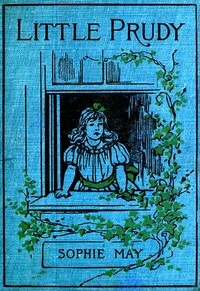
Those Kentucky girls felt so far from home on the Canal, their adventures carrying a whiff of danger I hadn’t expected from the era. It made me recall the gentler worries of Little Prudy, where a child’s mischief feels like the whole world’s trouble. There’s a quiet thread between those scaled-down fears and the grander ones, each speaking its own truth about safety. Little Prudy — Story, Setting & Ideas lingers in my mind as a softer mirror to that same longing.
There are no reviews for this eBook.
There are no comments for this eBook.
Reader reflection
What did you think of this book?
Answer a few questions and save a private reflection on this device.
Your progress
0
/
10
2
What was your overall reaction to the book?
3
Is this a title you would suggest to others?
4
Did the language feel accessible?
5
Was the book easy to understand?
6
Would this book work well in a reading group?
7
Was the book moving at the right speed?
8
How distinctive were its ideas or approach?
9
In one sentence, what did you learn?
10