1

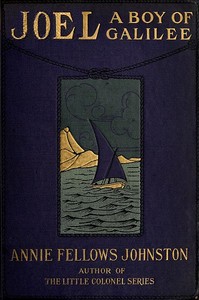
Joel: A Boy of Galilee — Inside the Classic
(0 User reviews)
1490
Project Gutenberg
2012
Not confirmed
Christian life -- Juvenile fiction; Biographical fiction; Siblings -- Juvenile fiction; Conversion -- Juvenile fiction; Jesus Christ -- Juvenile fiction; Children -- Conversion to Christianity -- Juvenile fiction; Galilee (Israel) -- Juvenile fiction; Martyrs -- Juvenile fiction; Preaching -- Juvenile fiction
Readers of public-domain and historical texts
Project Gutenberg digital edition
en
Edition facts
Words
56,357
Reading time
246 min
Text sections
8
This digital edition of Joel: A Boy of Galilee — Inside the Classic is described by source-level measurements including 56,357 words, 4 hr 6 min estimated reading time, and 8 detected text sections.
The text analysis averages about 16.1 words per sentence, while the detected sections provide another way to judge how the source is divided.
Project Gutenberg metadata also associates the work with “Christian life -- Juvenile fiction,” connecting these edition facts with the source record’s subject description.
Source:
Project Gutenberg record #39231
This editorial note examines Annie F. Johnston's use of sensory detail, biblical cadence, and domestic realism in 'Joel: A Boy of Galilee,' focusing on how the author constructs first-century Galilean life through a child's perspective without relying on plot summary.
Read the complete public-domain text at its original source.
Read on Project GutenbergAnnie F. Johnston builds the world of first-century Galilee not through grand historical set pieces but through small, tactile moments. When young Jesse looks into Jacob's well, he sees his own face reflected and backs away, then examines the cup of water before drinking. That hesitation—a child's wariness of the unfamiliar—is typical of Johnston's method: she renders ancient customs through physical, everyday reactions. The narrative voice shifts easily between scriptural echo and domestic observation, as when Abigail strips leaves from an almond switch while quoting Proverbs. These choices ground the story in a specific, tangible reality.
Diction and the Biblical Cadence
Johnston's prose often borrows the rhythm of the King James Bible, but she adapts it for a child audience. Sentences like 'She is a ray of God's own sunshine' or 'a lamp to his feet in later years' carry scriptural weight without being direct quotations. The grandmother's speech—'All these she told, and many more'—uses the paratactic style of Hebrew narrative, stringing clauses with 'and.' Yet Johnston breaks this pattern with colloquial interruptions: Jesse's cries are 'unusually loud and appealing,' and his grandfather brings home 'cakes and figs and a gay little turban.' The juxtaposition of solemn instruction and material indulgence reveals a domestic texture that the biblical source lacks.
Dialogue as a Window into Authority
Conversations in the excerpts often revolve around discipline and tradition. Abigail defends her use of the almond switch by citing Solomon: 'Chasten thy son while there is hope.' Her father, Reuben, acknowledges the proverb's truth but cannot bear to witness the punishment. This exchange does more than advance character—it dramatizes a tension between legalistic obedience and grandfatherly affection. Johnston lets the dialogue carry the conflict without authorial comment. The boy's cries, 'unusually loud and appealing,' are left ambiguous: are they genuine pain or a bid for sympathy? The grandfather's response—a gift of sweets and a turban—suggests he interprets them as the latter, but the text does not confirm.
Description and the Material World
Johnston lavishes attention on objects: 'bright oriental curtains, the soft cushions and the costly hangings,' 'silver candlesticks and the jewelled cups.' These details serve a dual purpose. They establish Reuben's wealth—'Reuben the Charitable'—and they satisfy a child's curiosity about surfaces and textures. Jesse 'walked about, laying curious little fingers on everything he passed,' and the narrative mirrors his tactile exploration. The prohibition against pictures ('the Law forbade') is mentioned only to explain the presence of metal mirrors, which fascinate Jesse. Johnston does not lecture; she lets the material culture of the setting emerge through what a boy would notice.
Structure and the Gleaning Motif
The excerpt includes a lengthy passage in which the grandmother explains the biblical commandment about leaving gleanings for the poor. She 'pointed to the gleaners in the fields' and quoted Leviticus verbatim. This is not a digression; it is a structural principle. Throughout the book, Johnston weaves scriptural instruction into the fabric of daily life, much as the gleaners gather leftover grain. The story itself gleans from the Gospels and Jewish custom, selecting details that fit a child's understanding. The publisher's preface claims the descriptions passed the test of 'an eminent rabbi,' and the text's care with ritual observance—the almond switch, the turban, the well—supports that claim without becoming pedantic.
Readers approaching Joel: A Boy of Galilee will find a narrative that moves at a child's pace, pausing over a reflection in a well or the feel of a silk curtain. Johnston's authorial choices—her biblical cadence, her focus on material objects, her dialogue that reveals rather than explains—create a world that feels lived in rather than merely described. The story does not need to be read as religious instruction; it works as a quiet, observant portrait of a particular time and place, seen through the eyes of a boy who is still learning what the world contains.
That editorial note about Annie Johnston's quiet way of seeing Galilee through a child's eyes stayed with me—how the dust and bread and lamp-light feel more real than any grand story. Reading The Dogs of Boytown — Inside the Classic afterwards felt like that same gentle hand, noticing small lives without pushing them toward drama. It lingered differently, softer.
There are no reviews for this eBook.
There are no comments for this eBook.
Reader reflection
How did this book work for you?
Your answers remain private and are stored only in this browser.
Your progress
0
/
10
2
Did this book hold your interest?
3
Would you recommend this book to another reader?
4
What was the reading difficulty like?
5
Was the book moving at the right speed?
6
Did the book give you something worth debating?
7
Which aspect of the book did you value most?
8
Would you read this book again?
9
Which lesson or insight stayed with you?
10