1

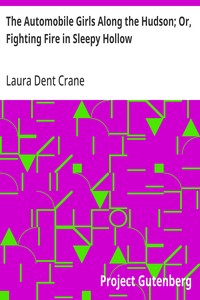
The Automobile Girls Along the Hudson; Or, Fighting Fire in Sleepy Hollow — A Reader’s Guide
(0 User reviews)
247
Project Gutenberg
2011
Not confirmed
Vacations -- Juvenile fiction; Adventure and adventurers -- Juvenile fiction; Girls -- Societies and clubs -- Juvenile fiction; Automobile travel -- Juvenile fiction; Brigands and robbers -- Juvenile fiction; Hudson River (N.Y. and N.J.) -- Juvenile fiction
Readers of public-domain and historical texts
Project Gutenberg digital edition
en
Edition facts
Words
58,157
Reading time
253 min
Text sections
6
The catalog record for The Automobile Girls Along the Hudson; Or, Fighting Fire in Sleepy Hollow — A Reader’s Guide provides practical reading context through 58,157 words, 4 hr 13 min estimated reading time, and 6 detected text sections.
The text analysis averages about 14.8 words per sentence, while the detected sections provide another way to judge how the source is divided.
Project Gutenberg metadata also associates the work with “Vacations -- Juvenile fiction,” connecting these edition facts with the source record’s subject description.
Source:
Project Gutenberg record #37454
This editorial note examines how Laura Dent Crane structures the girls' Hudson River adventure through alternating domestic and outdoor scenes, recurring motifs of disguise and performance, and the strategic use of the Sleepy Hollow setting to frame a fire-fighting climax.
Read the complete public-domain text at its original source.
Read on Project GutenbergThe Automobile Girls Along the Hudson opens not with a motor trip but with Barbara and Mollie polishing a cottage floor, their banter about cold cream and automobiling grounding the adventure in everyday concerns. This domestic vignette quickly gives way to a journey that moves between private interiors—cottages, Ten Eyck Hall's attic—and public landscapes: the Hudson River, a gypsy camp, a haunted pool. Crane structures the narrative as a series of set pieces, each with its own visual and emotional texture, linked by the girls' automobile and their curiosity.
Movement Between Interior and Exterior
The story repeatedly shifts from enclosed spaces to open-air scenes, creating a rhythm of confinement and release. The opening chapter stays inside a cottage, where the girls polish furniture and discuss Ruth's generosity. Soon they are outdoors, motoring along the Hudson. Later, the narrative moves into Ten Eyck Hall, an old mansion with an attic mystery, then back to the woods for a gypsy encounter. This alternation is not merely scenic; it structures the plot. Secrets are discovered indoors (the attic), while confrontations and performances happen outside (the pool, the gypsy camp). The fire that gives the book its subtitle presumably breaks this pattern, bringing the outdoors into the domestic sphere.
Recurring Images of Disguise and Performance
Crane returns to the idea of people playing roles. Barbara and Mollie begin by pretending to be housemaids, wearing mobcaps and aprons. Later, the gypsy girl Zerlina performs a Spanish dance, drawing a knife from her blouse in a theatrical threat. José feigns sleep to avoid her. The girls themselves are described as fairy princesses or human beings in disguise. Even the setting—Sleepy Hollow—carries literary echoes of disguise and legend. These layered performances suggest that identity in the book is fluid, often a matter of costume or posture. The reader watches characters watch each other, aware that appearances may be staged.
The Hudson Valley as a Stage for Contrasts
The Hudson River setting is more than backdrop; it provides a series of contrasting locales that mirror the characters' moods. The peaceful pool where the girls have tea is juxtaposed with the gypsy camp, where Zerlina's ragged dress and smouldering eyes hint at danger. The old major's reference to ghosts of lost youth at Ten Eyck Hall introduces a note of melancholy. Crane uses these shifts in atmosphere to vary the story's emotional register. The fire that threatens Sleepy Hollow—a place already associated with legend—turns the landscape into a site of real peril, moving the narrative from picturesque tourism to urgent action.
Structure Through Chapter Titles and Pacing
The chapter titles reveal a deliberate pacing: from domestic preparation ("The Unexpected Always Happens") to mystery ("The Haunted Pool," "An Attic Mystery") to action ("The Fire Brigade," "Fighting the Fire"). Each title promises a new scene or problem, and the excerpts show that Crane delivers on these promises with concrete details—the oily stocking used as a polisher, the elaborate tea basket, Zerlina's guitar. The book's 25 chapters suggest a serialized structure, with each chapter functioning almost as an episode. This episodic quality, combined with the recurring motif of the automobile, gives the narrative a forward momentum even when the girls are stationary.
Readers attentive to structure will notice how Crane uses the automobile not just as transportation but as a device to move characters between different social and physical spaces. The girls' mobility allows them to encounter gypsies, hermits, and old mansions in quick succession. The fire, when it comes, tests the skills they have developed through these varied encounters. This edition preserves the original chapter breaks and illustrations, inviting readers to trace the pattern of movement and performance that defines the Automobile Girls' world.
I often think how Miss Crane’s girls, amid the Hudson’s flames, learned that courage wears a borrowed costume. That same gentle trickery—playing a part to find one’s true self—whispers through The Radio Detectives in the Jungle — Inside the Classic, where the wilds mask quieter transformations. Both books share a fondness for hiding in plain sight, a kinship I’ve cherished for decades.
There are no reviews for this eBook.
There are no comments for this eBook.
Reader reflection
How will you remember this book?
Save your reaction, strongest insight, and memorable passage.
Your progress
0
/
10
2
Was reading this book enjoyable?
3
Would you pass this book on to a friend?
4
Did the language feel accessible?
5
How distinctive were its ideas or approach?
6
How useful did the reading feel?
7
Do you expect to return to this book?
8
Did you relate to its people, ideas, or situations?
9
What did this book teach you most?
10