1

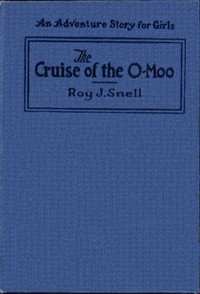
The Cruise of the O Moo — Themes and Context
(0 User reviews)
21
Project Gutenberg
2013
Not confirmed
Family -- Juvenile fiction; Yachts -- Juvenile fiction; Mystery and detective stories; Winter -- Juvenile fiction; Sisters -- Juvenile fiction; Michigan, Lake -- Juvenile fiction
Readers of public-domain and historical texts
Project Gutenberg digital edition
en
Edition facts
Words
41,752
Reading time
182 min
Text sections
6
For The Cruise of the O Moo — Themes and Context, the stored edition analysis reports 41,752 words, 3 hr 2 min estimated reading time, and 6 detected text sections.
The text analysis averages about 13.0 words per sentence, while the detected sections provide another way to judge how the source is divided.
Project Gutenberg metadata also associates the work with “Family -- Juvenile fiction,” connecting these edition facts with the source record’s subject description.
Source:
Project Gutenberg record #42040
An editorial note on Roy J. Snell's 'The Cruise of the O Moo' focusing on its narrative voice, pacing, and sensory details. The analysis examines the opening's atmospheric tension, the protagonist's internal reasoning, and shifts between action and reflection, all drawn from the provided excerpts.
Read the complete public-domain text at its original source.
Read on Project GutenbergThe opening of The Cruise of the O Moo establishes a tight, sensory-driven atmosphere. Lucile Tucker wakes to a “faint rat-tat-tat” that she compares to a yellow-hammer drumming on a hollow tree, a simile that grounds the mystery in natural imagery. The narrative voice shifts between her immediate physical reactions—sitting bolt upright, straining her ears—and her analytical mind, which dismisses the bird comparison because “birds don’t work at night.” This interplay of sensation and logic recurs throughout the excerpts, creating a rhythm of tension and reflection.
A Voice That Hovers Between Fear and Reason
The narrative voice in the excerpts alternates between visceral fear and measured deduction. When Lucile first hears the tapping, the prose is fragmented: “She strained her ears… She strained her eyes… She stilled her breathing.” The repetition mimics her hyperawareness. Yet immediately after, she “shrugged her slim shoulders” and murmurs the book’s title with a smile, undercutting the dread. This oscillation is a deliberate structural choice. Later, when Florence investigates the ice hole, her internal monologue is methodical: “That proves something… but just how much I can’t tell.” The voice never fully surrenders to panic, even when describing a “blue face in the night” (chapter II). Instead, it pivots to puzzle-solving, as when Lucile mentally dismantles the theory of Negontisks arriving in Chicago: “It can’t be imagined. It simply isn’t done.” This rational counterpoint keeps the mystery grounded in observable clues rather than supernatural leaps.
Pacing Through Sensory Detail and Repetition
Snell controls pace by layering sensory details and repeating key sounds. The opening paragraph uses the “lash-lash of the flag-rope” as a rhythmic anchor, mentioned three times in the first two pages. This auditory motif builds a sense of rising storm and unease. Action sequences, like Florence’s fall on the ice, are rendered in short, clipped sentences: “She tripped, then went sprawling. Her loosened skate shot off.” But the pace slows when characters reflect, as when Lucile sits “for a time in deep thought” before dismissing the Negontisk theory. The excerpts also show a pattern of physical movement followed by static analysis: Florence skates backward to retrace the sled’s path, then pauses to “study out” the meaning. These shifts prevent the narrative from becoming either breathless or stagnant, creating a rhythm that mirrors the investigative process.
Setting as a Character: The Frozen Lagoon and the Yacht
The setting in the excerpts is not merely backdrop but an active participant in the mystery. The yacht O Moo is described through its sounds—the flag-rope, the “drumlike boom of canvas”—and its darkness, “black as soot.” The frozen lagoon, meanwhile, becomes a site of physical evidence: a circular raised spot, a patch of blue ice with “rough and jagged” edges, and sled tracks that Florence traces backward. The ice is “fourteen inches thick,” a concrete detail that underscores the winter setting listed in the catalog subjects. Snell uses the environment to generate clues: the hole in the ice is linked to a mysterious man who “dropped in from nowhere,” and the sled’s trajectory toward the dry dock suggests a hidden route. The setting thus functions as a puzzle to be read, with the characters’ observations—like Florence noting the blue tint of the ice—driving the investigation forward.
Dialogue and Internal Monologue as Pacing Tools
Dialogue in the excerpts is sparse but purposeful, often giving way to extended internal monologue. When characters speak, it is typically to pose a question or state a conclusion, as when Lucile whispers “What was that?” or Florence murmurs “That’s queer.” These brief utterances punctuate longer passages of silent reasoning. For instance, after Florence’s fall, she engages in a lengthy internal debate about the sled’s path, with only a few murmured phrases like “That’s that” to mark transitions. This technique keeps the focus on the protagonist’s cognitive process rather than on conversation, which might slow the pace. The narrative voice thus becomes the primary vehicle for both suspense and explanation, blending action and analysis in a way that suits the mystery genre.
Readers attuned to narrative craft will notice how Snell uses the winter setting not just for atmosphere but as a source of concrete clues—the thickness of ice, the color of a hole, the direction of sled tracks. The story’s pace is driven by the tension between immediate sensory experience and deliberate reasoning, a balance that rewards close attention to both what characters feel and what they deduce.
That rainy afternoon, the O Moo analysis lingered longest on its quiet pauses—how Roy J. Snell let the river’s current do the talking between shouts of wind and engine. I closed the file, and somehow the screen drifted to another vintage travel story, The Automobile Girls Along the Hudson; Or, Fighting Fire in Sleepy Hollow — A Reader’s Guide, whose similarly unhurried rhythm felt like picking up the same conversation an hour later.
There are no reviews for this eBook.
There are no comments for this eBook.
Reader reflection
How did this book work for you?
Your answers remain private and are stored only in this browser.
Your progress
0
/
10
2
How did the book work for you overall?
3
Would you recommend this book to another reader?
4
What was the reading difficulty like?
5
How strongly did the book affect you emotionally?
6
Did it raise ideas you would like to talk about?
7
How original did the book feel?
8
Which aspect of the book did you value most?
9
What is the main idea you are taking away?
10