1

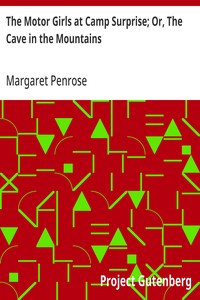
The Motor Girls at Camp Surprise; Or, The Cave in the Mountains — Story, Setting & Ideas
(0 User reviews)
202
Project Gutenberg
2011
Not confirmed
Caves -- Juvenile fiction; Girls -- Societies and clubs -- Juvenile fiction; Mystery and detective stories; Automobiles -- Juvenile fiction; Brigands and robbers -- Juvenile fiction
Readers of public-domain and historical texts
Project Gutenberg digital edition
en
Edition facts
Words
54,802
Reading time
239 min
Text sections
6
Before opening The Motor Girls at Camp Surprise; Or, The Cave in the Mountains — Story, Setting & Ideas, the edition data offers a quick orientation: 54,802 words, 3 hr 59 min estimated reading time, and 6 detected text sections.
The text analysis averages about 11.8 words per sentence, while the detected sections provide another way to judge how the source is divided.
Project Gutenberg metadata also associates the work with “Caves -- Juvenile fiction,” connecting these edition facts with the source record’s subject description.
Source:
Project Gutenberg record #36426
This editorial note examines how Margaret Penrose structures The Motor Girls at Camp Surprise through alternating movement and stillness, using road travel, hiking, and cave exploration to build suspense. The analysis focuses on the interplay between open landscapes and enclosed spaces, the role of sensory details like light and sound, and the way the narrative shifts between group banter and moments of peril.
Read the complete public-domain text at its original source.
Read on Project GutenbergThe Motor Girls at Camp Surprise opens not with a quiet morning but with a near-miss: Cora Kimball steers her automobile past a chicken and a child in quick succession, the horn blasting accidentally. From this first scene, the narrative establishes a pattern of motion punctuated by sudden halts—a rhythm that governs the entire story. The road, the mountain trail, and the cave each become stages where the characters’ easy chatter gives way to alert tension. Penrose uses the automobile not merely as transport but as a device that frames the girls’ mobility and their vulnerability when that mobility is interrupted.
Roads and Reversals
The opening chapter sets a tone of controlled speed. Cora’s driving is confident, yet the dialogue immediately introduces small errors—a misquoted proverb, a mistaken gender, a horn blast caused by a sudden turn. These details hint at a world where precision matters but is easily lost. The road itself is described as “long, shaded,” with trees forming “a green archway overhead” and “golden shadows flitted in the dust.” This idyllic setting contrasts with the later scene where the group becomes lost in the woods. There, the same natural beauty becomes disorienting: the sun, which should be at their backs, appears in front of them. Jack’s compass, a tool of rational navigation, fails to prevent their confusion. The reversal of direction—from east to west—mirrors the larger structure of the book, where forward movement repeatedly leads to unexpected detours.
The Weight of Bodies and Banter
Penrose gives each character a distinct physical presence through dialogue and action. Bess Robinson is repeatedly associated with weight: she is called “fat” by her sister Belle, complains of her feet, and is teased about needing to be carried. When Paul suggests making a litter, Bess insists on being carried feet first because “riding backwards always makes me car-ill.” This running joke does more than characterize—it grounds the adventure in bodily limits. The banter among the group, full of playful insults and misquotations, creates a social texture that makes the later moments of danger more jarring. When Cora announces “Jack, we’re lost!”, the shift from laughter to seriousness is abrupt. The narrative uses these tonal swings to keep the reader off balance, much like the characters themselves.
Light, Sound, and the Cave’s Approach
Recurring sensory details build anticipation for the cave that gives the book its subtitle. Early on, “golden shadows flitted in the dust like so many little chickens running to cover.” This image of fleeing light returns in the description of a “dancing light” later in the story. Sound is equally important: the horn blast in chapter one, the “trembling noise” mentioned in a chapter title, and the characters’ own voices—singing, laughing, then falling silent. The cave itself is introduced gradually through these hints. The chapter titles alone trace a path: “The Storm,” “Tied Up,” “A Night Ride,” “That Noise,” “Was It Thunder?” Each suggests a sensory disturbance that the cave will ultimately explain. Penrose withholds the cave’s full revelation until late in the narrative, using the mountain setting as a slow reveal.
Movement Between Open and Enclosed Spaces
The story’s geography alternates between expansive landscapes and tight confines. The automobile travels open roads; the hiking party moves through “a patch of woodland” and emerges into “a clearing.” The camp itself, named “Camp Surprise,” is a temporary home that promises safety but proves permeable to threat. The cave, when it appears, is the ultimate enclosed space—a place of hiding, imprisonment, and secret passages. This oscillation between open and closed spaces structures the plot’s tension. Each time the characters enter a new space, the narrative slows to describe its qualities: the road’s arching trees, the woods’ lengthening shadows, the cave’s darkness. Penrose uses these descriptions not as mere backdrop but as active elements that shape the characters’ choices and the story’s pace.
Readers attentive to structure will notice how Penrose builds suspense through repetition and variation: a lost trail, a strange man, a dancing light—each motif recurs with slight changes, deepening the mystery. The book rewards a careful reading of its spatial logic, where every movement forward carries the risk of being turned around. The cave, when it finally appears, feels earned because the narrative has been preparing for it all along.
I keep turning back to how The Motor Girls at Camp Surprise lingers in that quiet pause before the cave’s darkness—light thinning into a hush. It reminds me of another story’s frozen stillness, where silence itself becomes a kind of landscape. That patient dread, the held breath before discovery, feels like the same hand writing weather into tension. The Ice Queen — Story, Setting & Ideas holds that cold, waiting quality too, as if the mountain air remembers both.
There are no reviews for this eBook.
There are no comments for this eBook.
Reader reflection
Your personal reading reflection
Build a private reading journal entry for this title.
Your progress
0
/
10
2
Was reading this book enjoyable?
3
Would you recommend this book to another reader?
4
How much effort did this book require?
5
Did anything about the book feel genuinely new?
6
How clearly were the main ideas presented?
7
How strong was your personal connection to the text?
8
Could you see yourself revisiting this book?
9
What is the main idea you are taking away?
10