1

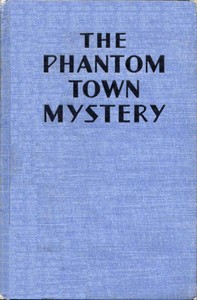
The Phantom Town Mystery — Reading Notes
(0 User reviews)
714
Project Gutenberg
2013
Not confirmed
Western stories; Treasure troves -- Juvenile fiction; Caves -- Juvenile fiction; Mystery and detective stories; Ranch life -- Juvenile fiction; Arizona -- Description and travel -- Juvenile fiction; Haunted places -- Juvenile fiction
Readers of public-domain and historical texts
Project Gutenberg digital edition
en
Edition facts
Words
55,390
Reading time
241 min
Text sections
8
For The Phantom Town Mystery — Reading Notes, the stored edition analysis reports 55,390 words, 4 hr 1 min estimated reading time, and 8 detected text sections.
The text analysis averages about 14.3 words per sentence, while the detected sections provide another way to judge how the source is divided.
Project Gutenberg metadata also associates the work with “Western stories,” connecting these edition facts with the source record’s subject description.
Source:
Project Gutenberg record #43699
Carol Norton's 1933 children's mystery follows Eastern girls Dora and Mary on an Arizona ranch, where a ghost town, a wooden doll, and a secret rock house drive a plot that shifts between breezy dialogue and tense nocturnal scenes.
Read the complete public-domain text at its original source.
Read on Project GutenbergThe opening gallop across an Arizona desert road sets a brisk, sensory pace: a whirl of sand, rearing horses, and a sage-scented wind. Norton immediately establishes two contrasting Eastern girls—olive-tinted Dora and fair Mary—alongside a pale college student and a cowboy guide. The narrative voice is direct, favoring action and dialogue over interior reflection. Early chapters alternate between lighthearted banter about saddle-breaking and a growing unease as the group approaches a ghost town of deserted adobe houses. This tonal swing, from sunlit riding to the shadow of ruins, becomes a structural pattern throughout the excerpts.
Dialogue as Character and Pace
Norton uses dialogue to differentiate her characters and control tempo. Dora speaks in a matter-of-fact tone, Mary with wistful artlessness. In the bedroom scene, their exchange about dolls and future children reveals personality without slowing the mystery: Dora’s tomboy pragmatism versus Mary’s sentimental mothering. The cowboy Jerry and student Dick speak in colloquial, clipped phrases—“I reckon you two’ll want to ride in the rodeo”—that contrast with the girls’ more formal Eastern cadences. When the plot needs acceleration, Norton shortens exchanges to quick back-and-forths; when she wants reflection, she lets a character monologue about hopes or fears. This vocal variety keeps the reading pace from becoming uniform.
Objects That Anchor the Mystery
Recurring physical items—a wooden doll, a skeleton stage coach, an evil-eye turquoise—serve as both clues and emotional anchors. The doll, introduced in chapter XVII, is treated by Mary with a tenderness that Dora finds puzzling; its homely, forlorn quality stirs a “mother love” that feels out of place in a treasure-hunt story. Yet Norton does not let the doll become mere sentiment: it is kissed good night, put to bed, and later tied to the mystery of Little Bodil. Similarly, the ghost town itself is less a setting than a prop—its adobe ruins described in the first line of the book, then revisited in later chapters as a site of danger. These objects create a tangible thread for readers to follow, grounding the plot in concrete details rather than abstract suspense.
Shifts in Setting and Tension
The narrative moves between open desert landscapes and confined, shadowy interiors. Early chapters emphasize wide vistas—galloping horses, a cross desert road, soft shimmering sand—that convey freedom and adventure. As the mystery deepens, scenes retreat into the ranch house, a barn loft, or a rock house with a secret entrance. The bedroom conversation about marriage and naming children, for instance, occurs after a lantern-lit tip-toe through a darkened hall, a domestic space suddenly charged with nocturnal quiet. Norton also punctuates calm with abrupt action: a sand storm, a gun shot, a cry for help. These shifts prevent the story from settling into a single mood, keeping the reader alert to changes in both location and atmosphere.
Readers will find that Norton’s pacing rewards attention to small details—a doll’s placement, a character’s offhand remark, the description of a rock formation. The mystery unfolds through accumulation rather than sudden revelation, and the dialogue often carries more weight than the action scenes. For those who enjoy early twentieth-century juvenile fiction, this title offers a clear example of how period authors balanced adventure with character development, using voice and object to sustain interest across a long narrative.
The old ghost town lingered after I closed the book, much like Carver House did after that Christmas mystery. Both places felt less like settings and more like quiet, watchful presences. There’s something about those nocturnal scenes, the hidden rock house and the wooden doll, that echoes the same hush I found in The Camp Fire Girls Solve a Mystery; Or, The Christmas Adventure at Carver House — Reading Notes. Just a certain stillness, a secret waiting under the desert or the snow.
There are no reviews for this eBook.
There are no comments for this eBook.
Reader reflection
How will you remember this book?
Save your reaction, strongest insight, and memorable passage.
Your progress
0
/
10
2
Did this book hold your interest?
3
Would you pass this book on to a friend?
4
How easy was the book to follow?
5
How original did the book feel?
6
Was the book easy to understand?
7
Which part made the strongest impression?
8
Would you like to discuss this book with someone?
9
What did this book teach you most?
10